
CLARITY Act Returns to Senate Amid Dimon Pushback as DuckDuckGo Debuts No-AI Search
What happened
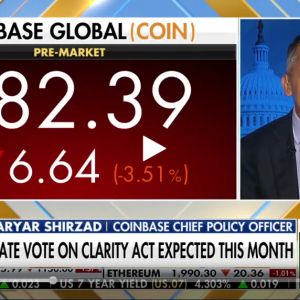
Late last month, the United States Senate saw the reintroduction of the "Clarity for Digital Assets" (CLARITY) Act. This bipartisan legislative effort aims to establish a framework for how certain digital assets are classified and regulated within the US. Its primary goal is to provide much-needed regulatory certainty, particularly in distinguishing between digital assets that function as securities and those that don't.
The timing of the Act's reintroduction aligned with prominent figures in traditional finance, such as JPMorgan CEO Jamie Dimon, continuing to express scepticism about cryptocurrencies. Dimon, known for his long-standing critical stance, reiterated his views on their inherent value and utility. This confluence of legislative push and traditional finance pushback highlights the ongoing, multifaceted debate surrounding digital assets on a global scale.
Simultaneously, privacy-focused search engine DuckDuckGo unveiled new features aimed at users wary of artificial intelligence integration. On June 1, DuckDuckGo released dedicated browser extensions for Chrome and Firefox, enabling users to easily set its AI-stripped subdomain, `noai.duckduckgo.com`, as their default search experience. This move caters to a growing segment of internet users concerned about AI's role in information retrieval and data privacy, offering an alternative for those seeking a more traditional, algorithm-free search interaction.
While seemingly disparate, these developments share a common thread: the evolving landscape of digital interaction and regulation. The CLARITY Act addresses the foundational legal treatment of digital assets, impacting how they are perceived and traded. Dimon's comments reflect a traditional banking perspective grappling with this new financial paradigm. DuckDuckGo's initiative, meanwhile, taps into a broader societal conversation about technology's influence and user control, extending beyond just financial applications but resonating with the ethos of privacy often associated with certain segments of the crypto community.
Why it matters for Australian investors
For Australian investors, legislative moves in major global economies like the US can have significant ripple effects. While Australia has its own regulatory considerations, such as those overseen by ASIC (Australian Securities and Investments Commission) and AUSTRAC (Australian Transaction Reports and Analysis Centre), a clear and robust framework in the US could set a precedent or influence future local policy discussions. Greater regulatory clarity internationally can reduce market uncertainty, potentially fostering more stable and predictable market conditions for all participants.
Ambiguity in classifying digital assets often leads to a 'wait and see' approach from institutional investors and can deter mainstream adoption. If the CLARITY Act succeeds in providing a clearer legal pathway, it could encourage broader institutional interest in digital assets globally, including from Australian funds and organisations. This increased capital inflow could positively impact the overall market, benefiting Australian investors holding various digital assets.
Furthermore, the ongoing debate from figures like Jamie Dimon, while not directly tied to Australian regulation, underscores the need for Australian investors to remain informed. Understanding the broader narratives – both supportive and critical – helps in forming a well-rounded investment thesis. It highlights that the digital asset space is not operating in isolation from traditional finance, and the two are increasingly intertwined in public discourse.
DuckDuckGo's AI-free search option, while not directly financial, resonates with a core tenet of the crypto and blockchain community: control over one's data and a preference for decentralised, transparent systems. For Australian investors who value privacy and seek alternatives to mainstream, potentially AI-driven platforms, this development offers a choice aligned with the philosophical underpinnings of many decentralised technologies. It serves as a reminder that the digital privacy landscape is continually evolving and offers alternatives for those who prioritise it.
Impact on the AUD market
The reintroduction of the CLARITY Act and the ongoing US regulatory discussions could indirectly influence the Australian Dollar (AUD) denominated digital asset market. If US regulatory clarity leads to increased global institutional investment and market buoyancy, Australian exchanges like CoinSpot, Independent Reserve, Swyftx, and BTC Markets could see higher trading volumes. This would be a positive indicator for the health and maturity of the local market.
Conversely, continued global regulatory uncertainty, or a perceived overreach, could dampen investor enthusiasm, potentially leading to downward pressure on digital asset prices, including those traded against the AUD. Australian investors often look to major international markets for trends, and US policy changes can sometimes dictate the broader sentiment that flows into our local exchanges. Therefore, monitoring the progress of the CLARITY Act is prudent for anyone trading crypto in AUD pairs.
Jamie Dimon's remarks, while not direct market movers, contribute to the narrative around digital assets. For the AUD market, this means that while established exchanges continue to operate under Australian regulations, the perception of digital assets in traditional finance circles can still influence the broader investor base. Australian financial advisors and institutions often consider these global viewpoints when evaluating digital asset exposure for their clients.
Downturns or surges in the global crypto market, often influenced by US regulatory news, will naturally be reflected in AUD pricing on local platforms. For example, if Bitcoin (BTC) sees a global price correction or rally due to US legislative progress, its AUD value on exchanges like Independent Reserve or Swyftx will follow suit, adjusting for the AUD/USD exchange rate. This interconnectedness means that developments like the CLARITY Act need to be on the radar of Australian crypto participants.
What to watch next
Australian investors should closely monitor the progression of the CLARITY Act through the US legislative process. While its passage is not guaranteed, its journey will provide insights into the US government's evolving stance on digital asset regulation. Key milestones, such as committee votes or debates, could all trigger market reactions, impacting global sentiment and subsequently, AUD-denominated crypto assets.
Keep an eye on how traditional financial institutions, both globally and within Australia, adapt their strategies in response to clearer regulatory guidance. If prominent US banks begin to offer regulated digital asset services, it could pave the way for similar developments in Australia, potentially leading to increased mainstream adoption and accessibility for local investors. This could also influence how the ATO (Australian Taxation Office) views and taxes various digital asset activities.
Beyond regulation, continue to observe the broader innovation within the digital asset space, particularly around privacy and user control, as highlighted by DuckDuckGo's recent move. While not directly financial, these developments reflect a continued push for user-centric digital environments, which often aligns with the ethos of many blockchain projects Australians are invested in. New technological solutions addressing privacy concerns could attract more users to the broader web3 ecosystem.
Finally, remain aware of the ongoing dialogue between traditional finance leaders and the digital asset sector. Even strong critics like Jamie Dimon contribute to the evolving narrative. Understanding these perspectives helps Australian investors gauge the broader sentiment and potential challenges or opportunities within the digital assets market moving forward. Staying informed across these various fronts is crucial for navigating this dynamic and rapidly evolving investment landscape.
Coins covered


Common questions
How does US crypto regulation impact my tax obligations as an Australian investor?
US crypto regulation does not directly change your tax obligations in Australia. The Australian Taxation Office (ATO) has its own specific rules for how digital assets are treated for tax purposes, based on whether they are considered an investment, personal use asset, or part of a business. However, global regulatory clarity can influence market stability and asset values, which in turn could affect the capital gains or losses you realise.
Will the CLARITY Act affect which cryptocurrencies I can trade on Australian exchanges like CoinSpot or Swyftx?
Directly, no. The CLARITY Act primarily concerns US regulation. Australian exchanges must comply with Australian laws, such as those from AUSTRAC and ASIC. However, if the CLARITY Act leads to certain assets being deemed 'securities' in the US, it might impact their global liquidity or how US-based projects operate, which could indirectly affect their availability or trading volume on Australian platforms over time.
What regulatory bodies should Australian crypto investors be aware of?
Australian crypto investors should be aware of AUSTRAC (Australian Transaction Reports and Analysis Centre), which regulates money laundering and terrorism financing for digital currency exchanges, and ASIC (Australian Securities and Investments Commission), which oversees financial products and services, including some crypto-related offerings. The ATO also plays a crucial role in taxation guidance for digital assets.
Dive into how the US CLARITY Act reintroduction and Jamie Dimon's crypto stance could impact Australian investors. A CoinPulse AU analysis.