
Bitcoin Traders Dump Long Bets as $636M Gets Wiped Out in One-Day Rout
What happened
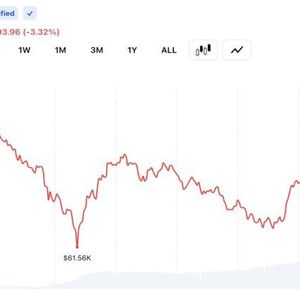
Bitcoin recently experienced a significant price correction, a flash crash that saw its value briefly dip towards the US$61,000 mark. This rapid decline triggered a wave of liquidations across the derivatives market, wiping out over US$636 million in long positions. A substantial portion of these liquidations occurred on leveraged trading platforms, indicating traders betting on upward price movement were hit particularly hard.
The cryptocurrency quickly rebounded from its low, surging back to approximately US$64,600 before settling just under US$64,000. Despite this recovery, the asset still recorded a notable daily loss of around 3.2%. On a broader scale, the weekly performance showed a downturn of 14%, and its year-to-date figures reflected a considerable decline of nearly 30% in 2026, highlighting sustained downward pressure leading up to this event. These rapid price swings underscore the inherent volatility in the crypto market.
This incident is not isolated, with similar liquidation events occurring periodically in highly leveraged markets. Often, a cascade of liquidations can exacerbate price movements, creating a 'flash crash' scenario where prices fall sharply as margin calls are met by forced selling. The subsequent rebound indicates strong buying interest emerged at lower price points, preventing a more severe downturn and suggesting underlying demand remains.
Why it matters for Australian investors
For Australian investors, such market events serve as a potent reminder of the inherent risks associated with cryptocurrency investments. While Australian exchanges like CoinSpot, Independent Reserve, Swyftx, and BTC Markets provide convenient access to Bitcoin, global price movements directly impact the AUD value of these holdings. A significant price drop like this means an immediate reduction in the Australian dollar equivalent of any Bitcoin an investor holds.
The prevalence of leveraged trading on international platforms, even if not directly accessible to all Australian retail investors due to regulatory restrictions or personal preference, still influences global Bitcoin pricing. The large-scale liquidation of long bets globally means increased market sell pressure, which then filters through to spot markets, affecting AUD-denominated prices across all exchanges.
Furthermore, the Australian Taxation Office (ATO) views cryptocurrency as property for tax purposes. Volatile price swings can have implications for capital gains or losses when disposing of Bitcoin. Investors need to accurately track the AUD cost basis and sale price of their crypto assets to meet their tax obligations, regardless of market volatility. Understanding these market dynamics is crucial for making informed decisions, especially concerning risk management and portfolio diversification.
Impact on the AUD market
The immediate impact on the Australian dollar (AUD) market for Bitcoin is primarily seen in the direct translation of the global price drop. When Bitcoin's USD value falls, its AUD value follows suit, assuming a relatively stable AUD/USD exchange rate. Australian investors checking their portfolios would have observed a notable decrease in their holdings' value almost instantly, reflecting the global market's reaction.
While Australian exchanges are regulated to varying degrees, such as meeting AUSTRAC's AML/CTF requirements, they generally reflect global spot prices rather than insulating Australia from international market movements. An investor looking at real-time AUD prices on platforms like Swyftx or Independent Reserve would see the direct effect of such a significant price decline. This interconnectedness means that even if Australian investors generally avoid high-leverage products, they are not immune to the downstream effects of global derivatives trading.
Market sentiment in Australia often mirrors global trends. A major price correction can lead to increased caution among retail and institutional investors. While some might see it as a buying opportunity, others might become more risk-averse. This collective sentiment can influence future investment decisions and overall market activity within Australia, potentially leading to reduced trading volumes or a shift into more stable assets.
What to watch next
Following a significant price correction, several factors will be crucial for Australian investors to monitor. Firstly, the overall market sentiment and recovery trajectory of Bitcoin will be key. A sustained rally above key resistance levels could signal a healthier market, while continued sideways movement or further dips might suggest prolonged uncertainty. Analysts will be closely watching trading volumes on both spot and derivatives markets for signs of conviction from either buyers or sellers.
Secondly, global macroeconomic indicators and regulatory developments remain significant. Interest rate decisions, inflation data, and any new legislative frameworks, particularly from major economies, can influence institutional appetite for risk assets like Bitcoin. For Australian investors, while direct ASIC regulation on crypto assets is evolving, global regulatory clarity or tightening can indirectly affect local market sentiment and liquidity.
Finally, observing on-chain metrics and funding rates on derivatives exchanges can provide insights into market health. A normalisation of funding rates and a decrease in open interest, particularly for long positions, after such a flush-out, could indicate a healthier, less overheated market. Australian investors should continue to prioritise robust risk management strategies and consider the long-term fundamentals rather than reacting to short-term volatility.
Coins covered



Common questions
What does a flash crash in Bitcoin mean for my Australian crypto holdings?
A flash crash means Bitcoin's price dropped very quickly. For Australian holdings, this translates to an immediate reduction in the AUD value of your Bitcoin. Even if you hold it on an Australian exchange like CoinSpot or BTC Markets, its AUD value will reflect the global price decline.
How does the ATO treat my Bitcoin if its value falls rapidly?
The ATO treats Bitcoin as property, meaning rapid value changes can result in capital losses if you sell it below your purchase price. These losses can potentially be used to offset future capital gains, but it's crucial to keep accurate records of your buying and selling prices in AUD to correctly report to the ATO.
Are Australian crypto exchanges affected by global Bitcoin liquidations?
Yes, Australian crypto exchanges are directly affected. While they primarily facilitate spot trading, global liquidation events on international derivatives platforms create significant selling pressure. This pressure impacts the overall market price of Bitcoin, which is then reflected in the AUD pricing offered by Australian exchanges like Swyftx and Independent Reserve.
Bitcoin's recent flash crash saw US$636M wiped out. CoinPulse AU analyses what this means for Australian investors, AUD markets, and what's next.