
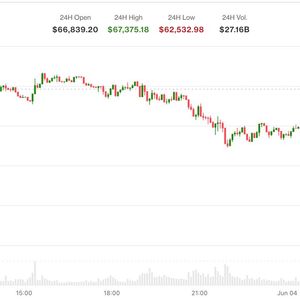
Bitcoin tanks below $63,000 for the first time since February as price selloff deepens
What happened
The cryptocurrency market experienced a significant downturn recently, with Bitcoin (BTC) prices falling below the US$63,000 mark. This dip represents the first time the digital asset has traded at these levels since February, signalling a deepening sell-off across the broader crypto landscape. The rapid price decline has notably impacted market sentiment, leading to an increased demand for protective options strategies.
This increased demand for options, often used to hedge against further downside risk, suggests a growing apprehension among investors. This sentiment is reflected in what market analysts term a rising "fear gauge", indicating a heightened level of uncertainty and caution. While the exact catalysts for the specific price point aren't fully detailed, the overall market trajectory points to a period of consolidation and re-evaluation among participants.
The downturn wasn't isolated to Bitcoin alone. Typically, when Bitcoin experiences a substantial price correction, altcoins often follow a similar trend, albeit sometimes with amplified volatility. This interconnectedness means that even investors primarily focused on other digital assets would have likely felt the ripple effects of Bitcoin's performance.
Historically, such significant price movements can be attributed to various factors, including macroeconomic indicators, regulatory news, or large-scale liquidations. Without specific details from the source, it's prudent to understand this as a broad market correction rather than an event tied to a singular, identified cause. The resulting market activity underscores the dynamic and often unpredictable nature of cryptocurrency investing.
Why it matters for Australian investors
For Australian investors, Bitcoin's move below US$63,000 carries several implications. Firstly, local pricing on Australian exchanges such as CoinSpot, Independent Reserve, Swyftx, and BTC Markets will reflect this global trend. While quoted in Australian Dollars (AUD), the underlying value is heavily influenced by the international US dollar price. This means any downturn in USD terms translates directly to lower AUD prices for Bitcoin and other cryptocurrencies on these platforms.
Secondly, market volatility, as evidenced by this sell-off, highlights the importance of a well-defined investment strategy. Australian investors, whether new to crypto or seasoned traders, should assess their risk tolerance and consider how such market movements align with their financial goals. The demand for protective options, while a global phenomenon, serves as a reminder to local investors about the tools available for managing risk, although such instruments may not be as readily accessible or as widely used in the Australian retail market.
Thirdly, the tax implications remain a constant consideration. The Australian Taxation Office (ATO) views cryptocurrency as property for capital gains tax (CGT) purposes. A significant price drop can lead to capital losses, which can potentially be used to offset capital gains. Conversely, future recovery and subsequent sale could incur CGT liabilities. Australian investors should maintain accurate records of their trades to ensure compliance with ATO regulations, especially during periods of high market activity.
Finally, market movements like these often spark renewed discussions around regulation. While Australia has made strides in establishing a regulatory framework for crypto, with organisations like AUSTRAC addressing anti-money laundering and ASIC overseeing certain financial products, a volatile market can sometimes prompt further scrutiny. This can influence future policy decisions that might impact how Australian investors engage with digital assets.
Impact on the AUD market
The direct impact on the Australian Dollar (AUD) market for cryptocurrency is primarily through price translation. When Bitcoin's US dollar value decreases, its AUD value on Australian exchanges follows suit. This means Australian investors holding BTC would see the AUD value of their portfolios diminish in line with the global correction. This is a common characteristic of globally traded assets, where local currency pricing reflects international benchmarks.
Beyond direct price translation, continued market uncertainty could temper new investment inflows from Australian participants. If the "fear gauge" remains elevated, some potential investors might delay their entry into the market, preferring to wait for more stable conditions. Conversely, some long-term Australian investors might view these lower prices as buying opportunities, based on their individual investment theses.
For Australian cryptocurrency businesses, such as exchanges and service providers, market downturns can affect trading volumes and, consequently, their revenue. Lower prices and reduced investor confidence can lead to decreased trading activity. However, resilient platforms often see sustained interest from long-term holders and strategic traders, even during bearish cycles.
It's also worth noting that the AUD's performance against the USD can indirectly influence the perception of local crypto prices. If the AUD strengthens against the USD during a crypto downturn, the AUD-denominated losses might appear slightly mitigated. Conversely, if the AUD weakens, the losses could feel more pronounced. However, the dominant factor here remains Bitcoin's intrinsic US dollar value.
What to watch next
Moving forward, Australian investors should closely monitor several key indicators. The most immediate is Bitcoin's price action on global markets. A sustained recovery above the US$63,000 mark could signal a return of bullish sentiment, while further drops might indicate a deeper correction. Monitoring support and resistance levels on price charts will be crucial for understanding potential future movements.
Beyond price, keeping an eye on the broader market sentiment, as indicated by metrics like the "fear and greed index" (which the demand for protective options contributes to), will provide insight into investor psychology. A shift from extreme fear back towards neutral or greed could precede a market rebound. Conversely, continued fear might suggest prolonged bearish conditions.
Globally, any significant macroeconomic news, particularly from major economies, should be considered. Factors such as inflation reports, interest rate decisions, or geopolitical developments can influence broader financial markets, including cryptocurrencies. These global events often cascade down to impact local market conditions.
From an Australian perspective, any new announcements regarding cryptocurrency regulation from bodies like AUSTRAC or ASIC should be closely watched. While major regulatory shifts are typically gradual, ongoing market volatility can sometimes spur discussions or reviews of existing frameworks. Staying informed on these developments will help Australian investors navigate the evolving landscape of digital assets.
Finally, observing the trading volumes on local Australian exchanges can offer insights into domestic investor activity and confidence. High volumes during a price recovery could signal strong buying interest, whereas low volumes during a downturn might indicate widespread caution. Diversification and understanding your personal financial situation remain paramount in a dynamic market like cryptocurrency.
Coins covered

Common questions
How does Bitcoin's price drop affect my crypto investments on Australian exchanges?
When Bitcoin's global price, typically quoted in US dollars, drops, the AUD value of your holdings on Australian exchanges like CoinSpot, Independent Reserve, Swyftx, and BTC Markets will also decrease. Australian exchanges translate the global price into AUD, so you'll see your portfolio's value decline proportionally.
What are the tax implications in Australia if my crypto portfolio loses value?
Under Australian Taxation Office (ATO) rules, cryptocurrency is considered property for capital gains tax (CGT). If your portfolio loses value and you sell your assets for less than you bought them, you may incur a capital loss. Capital losses can potentially be used to offset capital gains from other investments, reducing your overall tax liability. It's crucial to keep detailed records of all your crypto transactions for ATO compliance.
Should I be concerned about Australian crypto regulations during a market downturn?
Periods of market volatility often bring increased attention from regulatory bodies globally, and Australia is no exception. Organisations like AUSTRAC and ASIC continue to refine frameworks for anti-money laundering and consumer protection. While specific changes may not be immediate, staying informed about any proposed or enacted regulations is prudent, as they can impact how Australian investors interact with digital assets and financial product offerings in the crypto space.
Bitcoin's price fall below US$63,000 signals a deeper market sell-off. CoinPulse AU analyses the implications for Australian crypto investors and the AUD mark