
Bitcoin Slides Below $70K as Mt. Gox Moves $739M, CME Launches 24/7 Futures
What happened
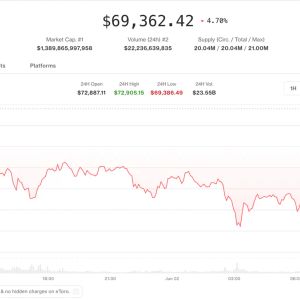
The cryptocurrency market, particularly Bitcoin, experienced a notable shake-up recently. Bitcoin's price dipped below the significant US$70,000 threshold, a move that captured the attention of investors globally. This price action occurred amid a confluence of developments that are reshaping market dynamics. One primary factor appears to be the long-anticipated movement of substantial Bitcoin holdings associated with Mt. Gox. Approximately US$739 million worth of Bitcoin, held by the defunct exchange, began to be transferred, sparking discussions about potential sell-offs and their market implications.
Simultaneously, traditional financial institutions are also expanding their footprint in the crypto space. The Chicago Mercantile Exchange (CME) Group launched 24/7 futures trading for Bitcoin. This move by a major regulated derivatives exchange signals increasing institutional interest and provides more avenues for professional investors to participate in or hedge against Bitcoin price movements. The continuous trading access could lead to more dynamic price discovery, potentially amplifying volatility during off-hours for some markets.
These events collectively contributed to a period of uncertainty and price adjustment for Bitcoin. The market is attempting to digest the implications of such a large transfer of previously dormant assets, alongside the growing integration of Bitcoin into established financial frameworks. Australian investors, much like their global counterparts, were closely watching these developments unfold, evaluating their potential ramifications for their portfolios and the broader crypto market.
Why it matters for Australian investors
For Australian investors, Bitcoin's price movements and underlying market dynamics are of significant importance. While the primary trading pair for Bitcoin is often USD, movements in the international market directly influence its valuation in Australian dollars (AUD). A dip below US$70,000 translates to a commensurate drop in AUD terms, impacting the portfolio values of many Australian holders.
The Mt. Gox transfers, representing a substantial volume of Bitcoin, introduce a supply-side risk into the market. While the exact intentions of the Mt. Gox trustee regarding these funds are not fully clear, even the anticipation of a potential sale can exert downward pressure. Australian investors who hold Bitcoin via local exchanges like CoinSpot, Independent Reserve, Swyftx, or BTC Markets will see this reflected in their platform's pricing, as these exchanges typically mirror global spot prices adjusted for the AUD/USD exchange rate.
Moreover, the introduction of 24/7 CME Bitcoin futures signals a maturing market, but also one with increased exposure to institutional strategies. While this offers new hedging opportunities for sophisticated Australian investors, it also means traditional finance participants can influence market direction more continuously. Australian regulators like ASIC and AUSTRAC continue to monitor the evolving digital asset landscape, shaping the local operational environment for exchanges and investors alike. Understanding these global shifts is crucial for navigating the local market effectively.
Impact on the AUD market
The immediate impact on the AUD market is primarily seen in the AUD-denominated price of Bitcoin. When Bitcoin's USD price declines, its value against the Australian dollar also falls, assuming a stable AUD/USD exchange rate. This can lead to a decrease in the AUD value of Australian investors' holdings, irrespective of whether they intend to sell. For those considering new investments, a price dip might be seen as an entry point, while others might view it with caution.
Australian exchanges process millions of dollars in cryptocurrency transactions daily. Significant price movements, whether up or down, can trigger increased trading activity on these platforms. Local exchanges must maintain robust infrastructure to handle these fluctuations and ensure liquidity for their users. The movement of such large sums of Bitcoin, even if not directly involving Australian entities, contributes to global market sentiment, which in turn influences the AUD market's perception of cryptocurrency risk and opportunity.
The broader economic implications for Australia are also worth considering. While not a direct impact on the national economy, a significant downturn in cryptocurrency markets can affect a segment of the Australian retail and institutional investment community. The ATO's guidance on cryptocurrency taxation means that any profits or losses realised from sales are subject to capital gains tax, making price volatility a key factor in investor planning and declarations.
What to watch next
Moving forward, Australian investors should closely monitor several key indicators. The primary focus remains on the trajectory of the Mt. Gox Bitcoin repayments. Whether these funds are gradually distributed or sold in larger tranches will significantly influence market sentiment and potential supply pressure. Any official announcements regarding the sales strategy from the Mt. Gox trustee will be pivotal in shaping market expectations.
Furthermore, the price action of Bitcoin itself against the US dollar will be paramount. Key support and resistance levels will be actively watched, as will the overall market's reaction to emerging macroeconomic data. Global inflation figures, interest rate decisions from major central banks, and geopolitical developments all have the potential to sway investor confidence and, consequently, cryptocurrency prices. The performance of Bitcoin against the AUD will directly reflect these global movements.
Also, keep an eye on how institutional engagement evolves with the new CME 24/7 futures contracts. Increased liquidity and participation from institutional players could bring greater stability or, conversely, introduce new levels of volatility. Finally, regulatory developments, both globally and specifically within Australia (from bodies like ASIC and AUSTRAC), will continue to play a crucial role in shaping the investment landscape by setting operational standards and consumer protections for digital assets. Staying informed on these fronts will be key for navigating the dynamic crypto market from an Australian perspective.
Coins covered

Common questions
How do Mt. Gox Bitcoin movements affect Australian cryptocurrency exchanges like CoinSpot or Swyftx?
Mt. Gox Bitcoin movements impact the global sentiment and supply of Bitcoin. While Australian exchanges themselves are not directly involved in these transfers, the global Bitcoin price, which these exchanges reflect in AUD, is influenced. If these movements lead to a price downturn, users on CoinSpot, Swyftx, Independent Reserve, or BTC Markets will see their AUD-denominated Bitcoin holdings decrease in value.
What is the ATO's stance on tax for Bitcoin price movements associated with events like Mt. Gox or CME futures?
The Australian Taxation Office (ATO) treats cryptocurrencies like Bitcoin as property for tax purposes. If an Australian investor sells Bitcoin for a profit, capital gains tax may apply. Conversely, if selling at a loss, it could potentially be used to offset other capital gains. These rules apply regardless of the specific events triggering price movements, such as the Mt. Gox repayments or the introduction of new financial products like CME futures.
Does the launch of 24/7 CME Bitcoin futures mean I can trade Bitcoin on the ASX?
No, the launch of 24/7 CME Bitcoin futures does not mean you can directly trade Bitcoin on the Australian Securities Exchange (ASX). CME futures are derivative products traded on a US-based exchange, primarily for institutional and professional investors. While the ASX has explored or listed crypto-related financial products in the past, directly trading Bitcoin spot or these specific CME futures on the ASX is not currently available for typical retail investors.
Bitcoin dips below US$70,000 amid Mt. Gox movements and CME's 24/7 futures. CoinPulse AU analyses what this means for Australian investors and the AUD crypto