
Bitcoin’s famous CME gaps are about to disappear, though three remain unresolved
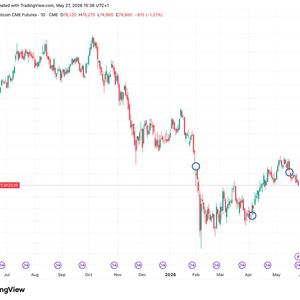
What happened
The cryptocurrency market is undergoing a subtle yet significant shift often overlooked by retail investors: the gradual elimination of Bitcoin futures 'gaps' on the Chicago Mercantile Exchange (CME). For years, these gaps have been a peculiar feature of Bitcoin's price charts, particularly those associated with the CME's institutional futures products.
Traditionally, the CME, like many traditional financial exchanges, operates on a fixed schedule, closing over weekends. This created a scenario where Bitcoin, a 24/7 global asset, would often see price movements over the weekend that were not reflected in the CME futures price until Monday's open. The difference between Friday's close and Monday's open on the CME futures chart created what are known as 'CME gaps'.
These gaps have long been a subject of extensive debate and analysis within the trading community. Some traders viewed them as potential indicators, often predicting that the price would eventually 'fill' these gaps – meaning it would return to the price level of the gap. This provided a unique technical analysis tool for those tracking institutional sentiment and traditional market participation in Bitcoin.
The recent introduction of round-the-clock trading for Bitcoin futures on the CME marks a pivotal moment. By extending trading hours to cover weekends, the primary mechanism for these long-standing gaps has been effectively removed. This development suggests a maturation of institutional crypto offerings, bringing them more in line with the continuous nature of the underlying digital asset.
While this change eliminates future weekend gaps, it's important to note that a few historical gaps remain unfilled. These legacy gaps will continue to be a point of interest for some analysts, much like historical support and resistance levels. However, the phenomenon of new weekend gaps is now largely a thing of the past for CME's Bitcoin futures.
Why it matters for Australian investors
For Australian investors, whether they're seasoned traders on platforms like CoinSpot or Independent Reserve, or just entering the market via providers such as Swyftx or BTC Markets, the disappearance of CME gaps signifies a broader trend towards market efficiency and institutional integration. While most Australian retail investors don't directly trade CME futures, the influence of these large institutional markets is far-reaching.
The CME's move to 24/7 Bitcoin futures trading is a strong indicator of increasing institutional demand and regulatory comfort. As major traditional financial players become more deeply involved, it can lead to increased market liquidity and potentially lower volatility over the long term. This could create a more stable environment for Australian investors holding Bitcoin as a long-term asset.
Furthermore, the increased integration of crypto into traditional financial structures can pave the way for more sophisticated financial products. While these might not be immediately available to all Australians, they represent a progression that could eventually impact local offerings. For instance, the improved infrastructure on the institutional side could facilitate the eventual approval of spot Bitcoin ETFs in other major jurisdictions, potentially influencing the global market sentiment that trickles down to Australian shores.
From a technical analysis perspective, Australian traders who previously factored CME gaps into their strategies will need to adjust. This highlights the dynamic nature of the crypto market and the need for investors to constantly adapt their approaches. The focus might shift more towards on-chain metrics, traditional chart patterns, and fundamental analysis as these unique institutional market idiosyncrasies diminish.
This evolution also underscores the importance of staying informed about global market developments, even if they seem distant from everyday Australian crypto trading. The intertwined nature of the global financial system means that developments in major institutional venues like the CME inevitably ripple across international markets, including the AUD-denominated crypto landscape.
Impact on the AUD market
The Australian dollar (AUD) denominated Bitcoin market, accessible through local exchanges, is intrinsically linked to global price movements. While CME futures are traded in USD, their influence on the overall Bitcoin price discovery mechanism is substantial. The reduction of CME gaps suggests a move towards more continuous and less 'gappy' price action, which could lead to a smoother correlation between AUD and USD Bitcoin prices across different platforms.
Local exchanges in Australia, such as CoinSpot, Independent Reserve, Swyftx, and BTC Markets, primarily reflect the global Bitcoin price adjusted for the AUD/USD exchange rate. As the global institutional market matures with 24/7 trading, the likelihood of significant price discrepancies between global and local markets, particularly after weekends, could diminish. This aids in price discovery and market efficiency for Australian traders.
For Australian investors considering their tax obligations, as guided by the ATO, this market evolution doesn't directly change the classification or treatment of their crypto assets. However, a more mature and integrated market might see increased regulatory scrutiny globally, which could eventually influence local frameworks managed by bodies like AUSTRAC and ASIC. A robust, well-regulated institutional market could potentially foster greater trust and adoption within traditional Australian financial circles.
While the direct impact on AUD-denominated trading pairs might appear subtle, the overarching sentiment from increased institutional participation and market efficiency is generally positive. It could attract more mainstream Australian investors who are accustomed to the predictability and continuous trading hours of traditional financial markets. This might contribute to broader adoption and deeper liquidity in the Australian crypto ecosystem.
Ultimately, the continuous trading of Bitcoin futures on the CME signifies a step towards Bitcoin being treated as a truly global, 24/7 asset across all significant trading venues. This standardisation benefits all participants, including those in the AUD market, by reducing fragmentation and improving overall market coherence.
What to watch next
Moving forward, Australian investors should closely monitor several key areas. The first is continued institutional adoption. As more traditional financial institutions embrace Bitcoin through regulated products, the market's stability and liquidity are likely to increase. This could manifest in new product offerings or increased participation from major players, directly impacting global price action that echoes in the AUD market.
Another point of interest is the regulatory landscape. While Australia has its own robust regulatory bodies like AUSTRAC for anti-money laundering and ASIC for financial services, global regulatory developments in major jurisdictions often set precedents. The increased institutional comfort suggested by 24/7 CME futures trading could inspire further clarity and potentially more favourable regulations for crypto assets internationally, which might eventually influence Australian policy.
Investors should also observe how the market adapts to the absence of new CME gaps. Will new technical analysis patterns emerge or will the focus shift back to more fundamental and on-chain metrics? Understanding these shifts can help Australian investors refine their trading strategies and investment philosophies.
Finally, keep an eye on the liquidity and trading volumes on both global institutional platforms and local Australian exchanges. Consistent growth in these areas, particularly during what were previously 'gap-prone' periods, would confirm the success of 24/7 trading initiatives. This ultimately points towards a more mature and integrated Bitcoin market, offering Australian investors an increasingly sophisticated and efficient environment to navigate.
Coins covered


Common questions
What is a 'CME gap' and how does its disappearance affect Australian crypto traders?
A 'CME gap' referred to a price gap on Bitcoin futures charts from the Chicago Mercantile Exchange (CME) that occurred when the market closed for the weekend. Bitcoin, trading 24/7, would often move in price, creating a difference between Friday's close and Monday's open on the CME. With 24/7 futures trading now implemented, these new weekend gaps are eliminated. For Australian traders, this means a move towards greater market efficiency and continuous price discovery, reducing unique technical analysis considerations related to these specific gaps.
Does 24/7 CME Bitcoin futures trading impact the AUD price of Bitcoin on Australian exchanges like CoinSpot or Swyftx?
While CME futures are USD-denominated, their continuous trading influences the global Bitcoin price discovery mechanism. As a result, the AUD price of Bitcoin on Australian exchanges like CoinSpot, Independent Reserve, Swyftx, and BTC Markets, which reflects global prices adjusted for the AUD/USD exchange rate, may benefit from increased price continuity. This change could lead to smoother, more consistent price movements without the historical weekend 'jump' or 'dip' often associated with CME gaps, potentially improving overall market coherence for Australian investors.
How does increasing institutional participation, as seen with CME's 24/7 trading, affect my crypto tax obligations in Australia?
Increased institutional participation and continuous trading on platforms like the CME do not directly alter your crypto tax obligations under Australian law, as guided by the ATO. The tax treatment of crypto assets, whether as capital gains or income, remains the same. However, a more mature and integrated global market could potentially lead to increased regulatory clarity and oversight internationally, which might indirectly influence future discussions or refinements of crypto regulations by Australian bodies like AUSTRAC and ASIC down the line. Always consult a tax professional for specific advice regarding your individual circumstances.
Discover how the elimination of Bitcoin's CME gaps impacts Australian investors, global market efficiency, and what comes next for the AUD crypto market.