
Bitcoin Price Analysis: BTC Eyes $70K-$72K Support Amid Market Weakness
Bitcoin's recent price action has caught the attention of investors globally, including those in Australia, as the digital asset navigates a period of market weakness. After struggling to maintain higher price levels, Bitcoin (BTC) has dipped below a crucial support zone, leading to cautious sentiment across the crypto landscape. This movement has significant implications for Australian investors, particularly those holding BTC or considering new entries into the market, as it could signal a shift in short-term momentum.
The broader crypto market has been affected by this downturn, suggesting that Bitcoin’s trajectory often dictates the sentiment for altcoins as well. Understanding the technical indicators and institutional flow dynamics behind these movements is key for making informed decisions in a volatile market. As Bitcoin approaches a critical support level, the next few weeks could prove pivotal for its short-term direction, and by extension, the broader cryptocurrency market.
What happened
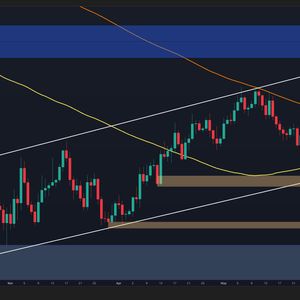
Bitcoin has recently fallen below the significant US$75,000-US$76,000 support region, a level previously seen as a key psychological and technical decision point for the market. This breakdown indicates a continuation of bearish momentum, especially after repeated attempts by BTC to reclaim the descending 200-day moving average near US$80,000-US$81,000 were unsuccessful. The inability to hold above these resistance levels suggests that selling pressure has outweighed buying interest in recent weeks.
Currently, BTC is testing a major confluence of technical supports within the US$70,000-US$72,000 range. This area is critical because it aligns with multiple technical indicators: an ascending lower boundary of a broader price structure, the 100-day moving average, and a historically significant order block. Such overlapping support zones often act as strong buffers, increasing the likelihood of a temporary bounce or a short-term price reaction.
The market’s immediate future hinges on whether buyers can successfully defend this US$70,000-US$72,000 range. If this support holds, Bitcoin could see a corrective recovery back towards the freshly established US$75,000-US$76,000 resistance zone. However, a failure to maintain this level could open the door for further declines, potentially pushing BTC towards deeper support regions around US$65,000-US$66,000, and even as low as US$60,000-US$63,000.
Beyond technical analysis, a significant factor contributing to Bitcoin's recent weakness is a noticeable slowdown in spot Bitcoin Exchange-Traded Fund (ETF) inflows. While Bitcoin attempted multiple recoveries in recent months, cumulative ETF inflows have flattened and displayed weaker performance, especially amidst the latest price correction. This cooling of institutional demand suggests that aggressive buying from large market participants, which often fuels strong rallies, has considerably diminished. This lack of fresh capital explains Bitcoin's struggle to sustain rallies above the US$80,000-US$82,000 region and indicates that the current market dynamics are likely to remain corrective in the short term, unless inflow trends reverse.
Why it matters for Australian investors
For Australian investors, Bitcoin's current market behaviour has several key implications. Firstly, the price movements in USD directly translate to AUD values on local exchanges such as CoinSpot, Independent Reserve, Swyftx, and BTC Markets. A significant drop in BTC's USD value means a corresponding decrease in its AUD value, impacting portfolio performance and investment strategies for local holders.
Secondly, the broader market sentiment created by Bitcoin’s performance often influences altcoin prices. Many Australian investors hold diversified crypto portfolios, and a sustained downturn in BTC could lead to broader market corrections across other digital assets. This highlights the importance of risk management strategies, which are particularly relevant given the ATO's guidance on digital currency tax treatment, where capital gains or losses on crypto assets must be reported.
Furthermore, the weakening institutional demand, evidenced by slower ETF inflows, signals a potential shift in the market's underlying strength. Australian investors typically monitor global institutional trends, as they often precede significant market movements. A decrease in large-scale capital injection could mean a more volatile or sideways market in the near term, making it crucial for investors to exercise caution and thorough due diligence before making new investments. This situation reinforces the need to stay informed about global market factors, even when trading on Australian-regulated platforms.
Finally, the technical structure of Bitcoin, approaching a critical support zone, presents both risks and opportunities. If the US$70,000-US$72,000 support holds, it might offer a temporary relief rally, potentially benefiting those who entered positions at lower levels or are looking for short-term trades. However, a break below this support could lead to further depreciation, necessitating a reassessment of investment theses and potentially triggering stop-loss orders for those managing risk actively. Awareness of these technical levels helps Australian investors gauge potential entry and exit points, aligning with their personal financial goals and risk tolerance.
Impact on the AUD market
The performance of Bitcoin in USD terms has a direct and immediate impact on its AUD pricing on Australian exchanges. When Bitcoin slides against the US dollar, its value in Australian dollars also declines, affecting the overall sentiment and liquidity within the local market. For instance, if Bitcoin trades around US$70,000, its approximate AUD equivalent (allowing for current exchange rates and exchange premiums) would be a significant figure for local investors to track.
Australian investors routinely use platforms like CoinSpot, Independent Reserve, Swyftx, and BTC Markets to buy and sell Bitcoin. Price fluctuations directly influence their holdings on these platforms. A period of sustained weakness could lead to reduced trading activity or increased selling pressure as some investors choose to de-risk. Conversely, if Bitcoin finds strong support and rebounds, these local markets would reflect that recovery swiftly, boosting confidence.
Beyond just immediate price, the slowdown in institutional ETF inflows, a key global indicator, could translate to a more cautious approach from Australian financial advisors and sophisticated investors looking to allocate capital towards digital assets. While AUSTRAC handles regulatory oversight for anti-money laundering and counter-terrorism financing for digital currency exchanges, the global market dynamics heavily influence local investment appetite, regardless of local compliance frameworks. ASIC also plays a role in overseeing financial products and services, but the decentralised nature of crypto means global trends are often paramount.
The overall market structure remaining bearish, unless BTC reclaims higher levels, means Australian investors should perhaps prioritise capital preservation. This cautious environment might also see a temporary shift away from high-beta altcoins, often favoured by risk-tolerant investors, towards more established assets or stablecoins, as investors seek refuge during uncertainty. The AUD market, while having its own unique characteristics, is inherently tied to the global movements of primary cryptocurrencies like Bitcoin.
What to watch next
The immediate focus for Bitcoin, and by extension the broader crypto market, remains the US$70,000-US$72,000 support zone. The market’s reaction at this pivotal level will likely dictate the short-term trajectory. If buyers can successfully defend this region, we could see a relief bounce, with BTC potentially aiming to revisit the broken US$75,000-US$76,000 level, which would now act as resistance. Australian investors should monitor this price action closely on their preferred local exchanges.
Conversely, a failure to hold the US$70,000-US$72,000 confluence could accelerate bearish momentum. This scenario might open the path for Bitcoin to test deeper supports around US$65,000-US$66,000, or even the broader US$60,000-US$63,000 demand region. Such a move would understandably heighten caution among Australian investors and could lead to further portfolio adjustments.
Beyond technical levels, the sentiment surrounding spot Bitcoin ETF inflows warrants continuous monitoring. A reversal in the trend of flattening or weakening institutional demand, with renewed robust inflows, would be a strong bullish signal. This influx of fresh capital would suggest that institutional investors are re-entering aggressive accumulation phases, which has historically preceded significant price appreciation for Bitcoin. Australian investors should look for reports on daily or weekly ETF flow data from reputable sources to gauge this crucial metric.
Finally, the macro economic environment and broader financial market sentiment will also play a role. Factors such as inflation data, interest rate decisions from major central banks, and global geopolitical events can indirectly influence risk assets like cryptocurrencies. While Bitcoin has often been touted as a hedge, it remains sensitive to overall market liquidity and investor appetite for risk. Keeping an eye on these broader economic indicators will provide a more comprehensive understanding of Bitcoin’s potential movements in the coming weeks and months, informing strategic decisions for Australian crypto participants.
Coins covered



Common questions
How do Bitcoin price drops affect my crypto holdings on Australian exchanges like CoinSpot or Swyftx?
When Bitcoin's price drops in US dollar terms, its value in Australian dollars on local exchanges like CoinSpot, Independent Reserve, Swyftx, and BTC Markets will also decrease proportionally, after accounting for current AUD/USD exchange rates and any platform-specific premiums. This means your crypto portfolio's AUD valuation will reflect the global market downturn.
What are the tax implications in Australia if my Bitcoin investment loses value?
In Australia, the ATO views cryptocurrencies as property for tax purposes. If your Bitcoin investment loses value and you sell it for less than you bought it, you may incur a capital loss. This capital loss can be used to offset capital gains from other investments in the same financial year or carried forward to offset future capital gains, which can impact your overall tax liability.
Should Australian investors be cautious about buying altcoins when Bitcoin is showing weakness?
Generally, when Bitcoin displays weakness, it often creates a 'risk-off' sentiment across the broader cryptocurrency market, leading to altcoins (alternative cryptocurrencies) also experiencing price declines. Many altcoins are highly correlated with Bitcoin's price movements. Therefore, Australian investors should exercise greater caution and conduct thorough research before investing in altcoins during periods of Bitcoin weakness, as they can be more volatile.
Bitcoin eyes crucial US$70K-US$72K support amid market weakness. CoinPulse AU analysis for Australian investors on technicals & ETF flows.