
Bitcoin Insurance for Persian Gulf Cargo: Iran Launches Hormuz Safe, Claims $10B Revenue
What happened
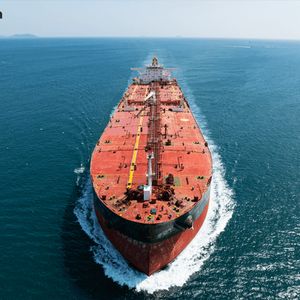
Recent reports from Fars News, a prominent Iranian news agency, indicate that Iran's Ministry of Economic Affairs and Finance has launched a new maritime insurance platform named "Hormuz Safe." This platform is reportedly powered by Bitcoin, signalling a novel approach to insurance within a region of significant geopolitical importance. The primary target for Hormuz Safe appears to be cargo owners whose vessels transit the critical Strait of Hormuz.
The Iranian government, through its Ministry, has expressed ambitious projections for this new venture. They anticipate that Hormuz Safe could generate over $10 billion in revenue for the Islamic Republic. This move positions Bitcoin not just as a speculative asset, but as a functional backbone for what could become a significant financial service in an unconventional market.
The Strait of Hormuz is a narrow, strategically vital waterway, indispensable for global energy supplies. Its geographical significance means that any new financial or operational mechanisms within its vicinity draw considerable international attention. The alleged use of Bitcoin in this context introduces a layer of complexity and innovation that warrants close examination.
The claims surrounding Hormuz Safe suggest an attempt by Iran to leverage decentralised digital currencies to navigate international financial systems. While details regarding the specific operational mechanisms of the Bitcoin integration are sparse in the initial reports, the announcement itself is a testament to the growing, multifaceted roles cryptocurrencies are beginning to play on the global stage.
Why it matters for Australian investors
For Australian investors, this development, while seemingly distant, carries several implications. Firstly, it highlights the increasing global adoption and functional utility of Bitcoin beyond its role as a digital store of value or a trading instrument. Such real-world applications can influence long-term demand and price stability, which is relevant for Australians holding Bitcoin as part of their investment portfolios on exchanges like CoinSpot, Independent Reserve, Swyftx, or BTC Markets.
Secondly, the use of Bitcoin in a politically sensitive region for a critical service like maritime insurance underscores its potential as a tool for economic activity in environments where traditional financial channels might be constrained. This strengthens the narrative of Bitcoin as a censorship-resistant and borderless financial infrastructure, a concept that attracts many decentralisation-focused investors globally, including in Australia.
Furthermore, the projected revenue figures, if accurate, indicate a significant economic footprint for this Bitcoin-powered platform. Large-scale, state-backed blockchain initiatives, even unconventional ones, can act as a bellwether for broader institutional interest and the maturity of crypto infrastructure. Australian investors should view such developments as part of the broader, ongoing evolution of the crypto ecosystem.
Finally, while direct investment in Hormuz Safe is unlikely for Australians, the news reinforces the need for due diligence and an understanding of the global regulatory landscape surrounding cryptocurrencies. Australia's regulatory bodies, such as AUSTRAC for anti-money laundering and ASIC for financial services, are continually watching international precedents, and novel uses of crypto could eventually inform local policy discussions, affecting how Australians engage with digital assets.
Impact on the AUD market
The immediate direct impact of Hormuz Safe on the Australian dollar (AUD) market is likely minimal. The AUD's value is primarily driven by commodity prices, interest rate differentials, and global risk sentiment. However, indirect effects could materialise over time, particularly if the broader trend of cryptocurrency adoption for state-level financial services accelerates.
If Bitcoin's role in global trade and finance expands substantially, it could incrementally shift some capital flows away from traditional fiat currencies. While this is a long-term, speculative consideration, any significant movement could, in theory, affect the AUD's relative strength or its position in international transactions. For now, this remains a fringe consideration rather than a primary driver.
More concretely, sustained high-profile usage of Bitcoin, irrespective of location, could bolster its legitimacy as a global currency. This might encourage more Australian businesses and consumers to consider Bitcoin for cross-border transactions, potentially reducing reliance on traditional remittance channels that often involve AUD conversions. Such a shift, though gradual, could subtly influence foreign exchange dynamics.
Australian investors also hold a significant interest in global energy markets. Given the Strait of Hormuz's role in oil transit, any platform that influences shipping economics in the region could eventually have a ripple effect on global energy prices, which in turn can influence the AUD via its commodity export sensitivity. However, this is a highly indirect and speculative chain of events for now.
What to watch next
Australian investors should monitor several key aspects regarding the Hormuz Safe platform. Firstly, further details regarding the technological implementation of Bitcoin. Understanding whether it uses the native Bitcoin blockchain, a sidechain, or another layer-2 solution will be crucial. This insight could offer valuable lessons for other real-world applications of Bitcoin.
Secondly, observe the actual revenue generation and operational success of Hormuz Safe. The $10 billion projection is ambitious, and its realisation (or lack thereof) will be a critical indicator of the platform's viability and the broader feasibility of state-backed Bitcoin services. Transparency on these figures, if forthcoming, will be important.
Thirdly, keep an eye on international reactions and regulatory responses globally. Other nations, particularly those involved in maritime trade or with significant cryptocurrency ecosystems, may respond with their own initiatives or regulatory frameworks. This global evolution will undoubtedly inform Australia's own approach to digital asset regulation, impacting issues like tax treatment by the ATO and compliance requirements from AUSTRAC.
Finally, watch for similar innovations leveraging cryptocurrencies in sectors like trade finance, supply chain management, or other forms of insurance. Hormuz Safe, if successful, could become a blueprint for how non-state actors or other nations utilise decentralised technologies to circumvent or enhance existing financial infrastructures. This broader trend could open new investment opportunities for forward-thinking Australian investors in the burgeoning blockchain and Web3 space.
Understanding these nuanced developments is essential for Australian investors navigating the dynamic landscape of digital assets, ensuring they remain informed on global trends that could shape their local market and investment strategies.
Coins covered


Common questions
How does the ATO currently view Bitcoin in Australia for tax purposes?
The Australian Taxation Office (ATO) generally treats Bitcoin and other cryptocurrencies as property for capital gains tax (CGT) purposes. This means that when you sell, trade, or otherwise dispose of Bitcoin, you may incur a CGT event. It's essential for Australian investors to keep detailed records of all their crypto transactions, including purchase costs and disposal prices, to accurately calculate their tax obligations.
Are there any Australian exchanges that allow me to buy and sell Bitcoin securely?
Yes, Australian investors have several reputable and AUSTRAC-registered cryptocurrency exchanges available to them. Popular options include CoinSpot, Independent Reserve, Swyftx, and BTC Markets. These platforms generally offer secure trading environments, AUD on-ramps and off-ramps, and comply with Australian regulatory requirements, providing a safe way to enter and exit the Bitcoin market.
Could a Bitcoin-powered insurance platform like Hormuz Safe affect global shipping costs faced by Australian businesses?
While the immediate impact is likely minimal, in the long term, if Bitcoin-powered insurance platforms gain widespread adoption and prove more efficient or cost-effective than traditional options, it *could* theoretically lead to adjustments in global shipping insurance premiums. For Australian businesses that rely on international trade, particularly through key shipping lanes, such as the Strait of Hormuz, changes in insurance costs could indirectly affect their overall logistics expenses. However, this would depend on many factors, including the platform's scale, adoption rates, and stability.
Explore the implications of Iran's new Bitcoin-powered maritime insurance platform, Hormuz Safe, for Australian crypto investors and the AUD market.