
Bitcoin Holds $76K as Binance Retail Inflows Crash 73%, $400M Longs Liquidated
What happened
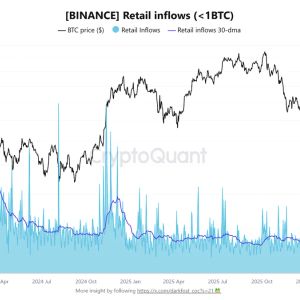
Recent data from Binance, one of the world's largest cryptocurrency exchanges, indicates a notable shift in retail Bitcoin activity. Monthly inflows of Bitcoin from wallets holding less than 1 BTC have seen a substantial decline. This particular metric, often used as a proxy for retail investor engagement, suggests a slowdown in smaller-scale participation on the platform.
The reported average for these retail inflows stands at approximately 314 BTC per month. This figure represents a significant reduction from previous levels, highlighting a potential cooling in the retail segment of the market. Such a decline in inflows can sometimes precede broader market movements or reflect changing sentiment among individual investors.
Simultaneously, the broader Bitcoin market has experienced considerable volatility, with a reported $400 million in long positions being liquidated. Liquidations occur when leverage traders' positions are forcibly closed due to insufficient margin to cover losses, often triggered by sharp price movements against their bet. This event typically indicates significant market pressure and can lead to cascades of selling.
These two developments — decreased retail inflows on a major exchange and substantial liquidations — paint a picture of a market undergoing re-evaluation. While Bitcoin has maintained a robust price point, these underlying shifts in market dynamics warrant close observation from all participants, especially those in the Australian investment landscape.
Why it matters for Australian investors
For Australian investors, understanding these global trends is crucial, even when dealing with local exchanges like CoinSpot, Independent Reserve, Swyftx, or BTC Markets. While these platforms cater specifically to the Australian market, the global nature of Bitcoin means that significant shifts in liquidity, sentiment, or trading patterns on major international exchanges like Binance can have ripple effects locally. A reduction in retail activity globally might indicate waning speculative interest, which could influence price action on AUD-denominated pairs.
Furthermore, events like large-scale liquidations can increase market volatility. Australian investors should be mindful of this, particularly if they are engaged in leveraged trading or hold significant positions that could be exposed to sudden price swings. The Australian Securities and Investments Commission (ASIC) has previously issued warnings regarding the risks inherent in highly volatile assets and leveraged products.
The overall health and participation levels of the global Bitcoin market also indirectly affect the Australian regulatory landscape and the digital asset ecosystem. Sustained periods of low retail engagement could influence how organisations like AUSTRAC monitor transactions or how the Australian Taxation Office (ATO) views typical investor behaviour for tax purposes. While the ATO’s stance on crypto as an asset remains consistent, market dynamics can impact reporting volumes and investor sentiment towards compliance.
Ultimately, a healthy global market fosters a more stable local one. A slowdown in retail inflows internationally suggests a period where new capital might not be entering the market at the same pace, which could impact the trajectory of Bitcoin's price, and by extension, the value of Australian investors' portfolios.
Impact on the AUD market
The Australian dollar (AUD) crypto market, while often reflecting global price movements, has its unique characteristics. A decline in global retail interest could lead to reduced trading volumes on AUD-denominated Bitcoin pairs across Australian exchanges. This might mean less liquidity, potentially leading to wider bid-ask spreads, especially during periods of high volatility or sudden price changes. Investors using platforms such as CoinSpot or Swyftx might notice slower execution times for larger orders if liquidity drops.
Reduced retail inflows on major international platforms could also dampen overall market sentiment globally, which inevitably filters down to the Australian market. When global confidence in Bitcoin dips, even slightly, it can influence Australian investors' decisions to buy, sell, or hold their assets. This sentiment can be particularly pronounced given Bitcoin's role as a bellwether for the broader cryptocurrency market.
From a regulatory standpoint, sustained changes in market activity could indirectly influence the focus of Australian financial bodies. While AUSTRAC continues its work in anti-money laundering and counter-terrorism financing for digital assets, shifts in retail participation might adjust the risk assessments applied to certain types of transactions.
However, it's important to remember that the Australian market also operates within its own economic context. Local factors, such as interest rate decisions by the Reserve Bank of Australia or broader economic performance, can also influence how Australian investors allocate capital, potentially acting as a counterbalance or amplifier to global crypto trends. Therefore, the impact on the AUD market is a complex interplay of global crypto dynamics and local economic conditions.
What to watch next
Australian investors should closely monitor a few key indicators moving forward. Firstly, continue to observe retail inflow data, especially across major exchanges. Any sustained reversal or further downturn in these figures could signal a shift in overall market sentiment. Secondly, keep an eye on trading volumes, both globally and on Australian exchanges like Independent Reserve and BTC Markets. Lower volumes often accompany periods of consolidation or indecision.
Furthermore, the derivatives market, where events like long liquidations occur, will be crucial. Large liquidations can create significant price volatility, which, while offering opportunities for some, poses considerable risk for others. Understanding the open interest and funding rates in perpetual futures markets can provide insight into the potential for future liquidations.
From a macroeconomic perspective, global interest rate policies and inflationary pressures will continue to influence investor appetite for risk assets like Bitcoin. Decisions by central banks, including the Reserve Bank of Australia, can impact the AUD's strength and, consequently, the perceived value of AUD-denominated crypto holdings. Changes in regulatory clarity from bodies like ASIC regarding crypto products or services in Australia could also sway investor confidence.
Finally, significant developments from major digital asset organisations or shifts in institutional adoption could rekindle retail interest. Any news involving major corporations or financial institutions entering the crypto space could signal renewed confidence and potentially attract new retail capital back into the market, shifting the current dynamics observed. Staying informed across these various fronts will be key for navigating the evolving crypto landscape.
Coins covered



Common questions
How do global Bitcoin trends affect my crypto investments on Australian exchanges?
Global Bitcoin trends, such as changes in retail inflows or large liquidations, can significantly impact the Australian market. As Bitcoin is a globally traded asset, major price movements or shifts in investor sentiment on international exchanges often influence AUD-denominated prices and trading volumes on local platforms like CoinSpot, Swyftx, Independent Reserve, and BTC Markets.
What Australian regulations should I be aware of regarding Bitcoin investments?
Australian investors should be aware of guidance from the ATO regarding tax treatment of cryptocurrency, as gains and losses are generally subject to capital gains tax. AUSTRAC monitors digital currency exchange providers for anti-money laundering and counter-terrorism financing compliance. ASIC also provides guidance and warnings regarding the risks associated with cryptocurrency investments, particularly highly volatile or leveraged products.
If global retail inflows are down, does it mean Bitcoin is no longer a good investment for Australians?
A temporary decline in global retail inflows doesn't necessarily mean Bitcoin is no longer a viable investment. It can indicate a period of consolidation or reduced speculative interest. For Australian investors, it's vital to conduct thorough research, understand the risks, and align investments with personal financial goals, rather than relying solely on short-term market sentiment or a single metric. Diversification and understanding market cycles remain important.
Explore how declining retail Bitcoin inflows and liquidations on Binance could impact Australian investors. An in-depth analysis for CoinPulse AU.