
Bitcoin ETFs Bleed $1.3B as Coinbase Premium Hits Monthly Low, Korea Reviews Crypto Tax Repeal
What happened
The cryptocurrency market has recently observed significant shifts, with US spot Bitcoin Exchange-Traded Funds (ETFs) experiencing substantial outflows. These products, which have been a major focus for institutional investors, saw a net reduction of approximately US$1.3 billion in their holdings over a specific period. This capital movement suggests a notable shift in investor sentiment, particularly among larger players in the American market.
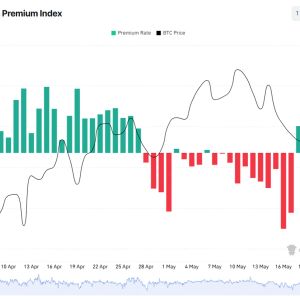
Simultaneously, a key indicator for market demand, the Coinbase Premium, has reached its lowest point this month. The Coinbase Premium measures the difference in Bitcoin's price on Coinbase Pro compared to other global exchanges. A lower premium often signals reduced buying pressure from US institutional investors, as Coinbase Pro is a primary venue for such large-scale trades. This confluence of ETF outflows and a reduced premium collectively points to a period of institutional de-risking or profit-taking within the US crypto landscape.
Further adding to the evolving global regulatory picture, South Korea is reportedly reviewing its proposed cryptocurrency tax. Originally slated for implementation, the potential repeal or deferral of this tax would signify a substantial policy shift in one of Asia's most advanced economies. Such a review points to ongoing debates among policymakers globally regarding the most effective and growth-supportive approaches to taxing digital assets, acknowledging their unique characteristics and rapidly evolving nature.
Why it matters for Australian investors
The dynamics observed in the US market, particularly regarding Bitcoin ETF flows and the Coinbase Premium, can have a ripple effect on global crypto valuations, including the Australian dollar (AUD) denominated market. While Australian investors do not currently have direct access to spot Bitcoin ETFs on local exchanges like CoinSpot, Independent Reserve, Swyftx, or BTC Markets, global market sentiment often influences local asset prices. A cooling off in institutional demand in the US could translate into broader price adjustments that affect AUD-pegged crypto values.
Understanding these international shifts is crucial for Australian investors planning their portfolio strategies. Although local regulatory frameworks, including those from ASIC and AUSTRAC, govern digital asset services in Australia, the underlying asset prices are heavily influenced by global supply and demand. Therefore, a pronounced institutional sell-off offshore could create buying opportunities for Australian investors, or conversely, signal a period of increased volatility to prepare for.
Regarding the South Korean tax review, while not directly impacting ATO's tax treatment of cryptocurrency in Australia, it highlights the international discussion around crypto taxation. The Australian Taxation Office (ATO) has a clear stance on treating crypto as property for capital gains tax purposes, with specific guidelines for various transactions. South Korea's debate, however, underscores the evolving nature of global tax policy for digital assets, which could indirectly spark further discussions or refinements in other jurisdictions over time.
Impact on the AUD market
The immediate impact on the AUD market from US ETF outflows typically manifests through indirect price correlation. Bitcoin's price, globally, is a major driver for most altcoins. When Bitcoin experiences significant liquidations from large US holders, it often causes a downward price movement that is mirrored on Australian exchanges. This means investors on platforms like CoinSpot or Swyftx might observe their AUD-denominated crypto holdings decrease in value.
Australian exchanges process transactions in AUD, providing direct exposure to global price movements filtered through the local currency. For instance, if Bitcoin's US dollar price drops by 5%, an Australian investor would see a similar percentage drop in its AUD value on their chosen platform, assuming the AUD/USD exchange rate remains stable. This interconnectedness means that institutional sentiment in the US is a powerful, though indirect, force shaping the performance of Australian crypto portfolios.
Furthermore, a period of global institutional caution, as suggested by the low Coinbase Premium, might lead to reduced overall market liquidity. Lower liquidity can amplify price swings, making the AUD market potentially more volatile. Australian investors, therefore, need to stay informed about these global indicators, even though their trading is conducted locally and subject to Australian legal and regulatory frameworks, including those enforced by AUSTRAC for anti-money laundering and counter-terrorism financing.
What to watch next
Moving forward, Australian investors should closely monitor the trajectory of US spot Bitcoin ETF flows. A reversal of the current outflow trend, perhaps driven by renewed institutional interest or specific market catalysts, could signal a bullish turnaround that would likely benefit the AUD crypto market. Conversely, continued outflows could sustain bearish pressure globally. These flows often act as a barometer for large-scale institutional sentiment towards Bitcoin.
Another critical area to observe is the continued evolution of regulatory environments, both domestically and internationally. While the ATO’s stance on crypto taxation in Australia is well-established, ongoing global discussions, such as the one in South Korea, could influence future policy approaches. Any shifts in major economies regarding crypto taxation or regulation could set precedents that Australia’s ASIC or AUSTRAC might consider in their evolving oversight of digital assets.
Finally, keeping an eye on the Coinbase Premium and similar indicators of institutional buying or selling pressure will remain important. A significant rebound in this premium would suggest a resurgence of US institutional demand, which historically has been a strong bullish signal for Bitcoin. For Australian investors using local platforms like Independent Reserve or BTC Markets, these global indicators offer valuable context for making informed trading and investment decisions in an increasingly interconnected crypto economy.
Coins covered

Common questions
How do US Bitcoin ETF outflows affect cryptocurrencies priced in AUD on Australian exchanges?
US Bitcoin ETF outflows can lead to a global decrease in Bitcoin's price. Since Australian exchanges like CoinSpot and Swyftx price cryptocurrencies in AUD, this global price drop typically translates to a similar decrease in the AUD value of your holdings. It's an indirect but significant connection due to the global nature of crypto markets.
What is the Coinbase Premium and why is it relevant for Australian crypto investors?
The Coinbase Premium is an indicator measuring the price difference of Bitcoin on Coinbase Pro compared to other global exchanges. A lower premium suggests reduced buying pressure from large US institutional investors. While you might not trade on Coinbase directly, this indicator is relevant because US institutional sentiment heavily influences global Bitcoin prices, which in turn affects your AUD-denominated investments on Australian platforms like Independent Reserve or BTC Markets.
Does South Korea's potential crypto tax repeal change ATO's crypto tax rules for Australians?
No, South Korea's potential crypto tax repeal does not directly change the Australian Taxation Office (ATO)'s rules for cryptocurrency. The ATO treats crypto as property for tax purposes, subjecting it to capital gains tax. However, international discussions and policy changes like South Korea's highlight the evolving global landscape of crypto regulation, which Australian regulators may observe for future policy considerations.
US Bitcoin ETFs see major outflows as Coinbase Premium drops. CoinPulse AU analyses what this means for Australian investors, AUD market, and future crypto tr