
Bitcoin Drops to $76K as Middle East War Fears Spark $722M in Liquidations
What happened
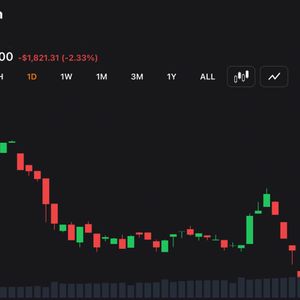
Bitcoin (BTC) recently experienced a notable downturn, slipping to approximately AU$76,000. This movement marks a reversal from an earlier, albeit brief, relief rally, contributing to a reduction in its total market capitalisation. The price fall was swift, coming amidst growing geopolitical uncertainties, particularly escalating tensions in the Middle East. Such global events frequently ripple through financial markets, and the cryptocurrency sector is no exception.
This price correction triggered a significant wave of liquidations across the broader crypto market. Data indicates that approximately AU$722 million in long positions were liquidated as Bitcoin's price retreated. This large-scale liquidation event underscores the leveraged nature of much of the cryptocurrency trading landscape. When prices move sharply against leveraged positions, automatic closures are triggered to cover margin calls, exacerbating price movements.
The decline saw Bitcoin's market valuation fall to around AU$1.53 trillion. This recalibration reflects both profit-taking and a cautious shift in investor sentiment as geopolitical risks loom larger. The interconnectedness of global financial markets means that even seemingly distant events can influence asset classes like cryptocurrencies, which are increasingly viewed through a macro lens by institutional and retail investors alike.
Why it matters for Australian investors
For Australian investors, Bitcoin's volatility, particularly in response to global geopolitical events, highlights significant considerations. While the local crypto market operates within its own regulatory framework, global price movements directly impact AUD-denominated assets. An AU$76,000 Bitcoin, or any substantial price movement, directly affects the portfolios of Australians holding BTC through local exchanges like CoinSpot, Independent Reserve, Swyftx, or BTC Markets.
The large-scale liquidations seen globally underscore the risks associated with leveraged trading. Australian investors engaging in such strategies, whether directly or through derivatives, face similar pressures. Understanding the mechanics of liquidation is crucial for managing risk within volatile environments. The global nature of crypto means that Australian investors are not insulated from major market shifts, even when those shifts are driven by international factors.
Furthermore, the Australian Taxation Office (ATO) classifies cryptocurrencies as property for capital gains tax (CGT) purposes. Any significant price fluctuation, whether up or down, has implications for tax reporting when assets are sold or swapped. Investors need to accurately track their cost basis and realise gains or losses. Volatility driven by geopolitical factors can create complex scenarios for tax planning, requiring careful record-keeping.
The broader narrative of Bitcoin as a safe-haven asset is often tested during geopolitical crises. While some proponents argue Bitcoin offers an alternative to traditional finance during uncertainty, its recent correlation with risk assets suggests it may not always fulfil that role immediately. Australian investors should consider this dynamic when evaluating their portfolio diversification strategies, understanding that crypto assets can still be subject to broader market sentiment.
Impact on the AUD market
The immediate impact on the Australian dollar (AUD) denominated crypto market is primarily through price translation. When Bitcoin's global price drops, its AUD equivalent falls in tandem, assuming a stable AUD/USD exchange rate. This can lead to increased selling pressure on Australian exchanges if local investors de-risk in response to global trends or if they need to meet margin calls.
Local exchanges and over-the-counter (OTC) desks in Australia will process trades at the AUD equivalent of the global BTC price. While the AUD market itself doesn't drive global Bitcoin prices, it reacts to them. A downturn can affect liquidity on these platforms, potentially widening bid-ask spreads for brief periods if order books become thinner due to rapid shifts in sentiment.
Regulatory bodies like AUSTRAC, which monitors financial transactions to combat illicit finance, will continue to observe trading volumes and patterns on Australian exchanges. Significant market movements can sometimes lead to increased scrutiny, although this is more about ensuring compliance rather than direct price intervention. ASIC also maintains an oversight role, particularly concerning investor protection and product offerings related to crypto assets.
An environment of geopolitical uncertainty and market volatility can also influence the appetite for new crypto listings or product innovations within Australia. While the market is maturing, sustained periods of downward pressure or uncertainty might delay institutional adoption or the launch of new investment vehicles locally, as both businesses and regulators adopt a more cautious stance.
What to watch next
Investors should closely monitor the evolving geopolitical situation in the Middle East. Any de-escalation could provide a catalyst for a market rebound, whereas further intensification might prolong bearish sentiment. Geopolitical tensions are notoriously unpredictable, making real-time information crucial for understanding potential market impacts.
Beyond external factors, watch for Bitcoin's technical price levels. Key support and resistance zones will indicate whether the current downturn is a temporary correction or the beginning of a more prolonged trend. Analyst commentary and on-chain metrics, such as whale movements and exchange inflows/outflows, can offer further insights into market sentiment and potential price direction.
The broader macroeconomic landscape also remains critical. Inflation narratives, interest rate decisions by major global central banks, and the strength of the US dollar can all influence Bitcoin's price. As crypto increasingly integrates with traditional finance, these macro forces play a more significant role than ever in its performance.
Finally, keep an eye on how regulatory environments continue to evolve globally and within Australia. Clearer regulatory frameworks could bring more institutional capital into the market, providing stability. Conversely, stricter regulations or uncertainty around official positions from bodies like AUSTRAC or ASIC could dampen investor enthusiasm. The confluence of these factors will dictate Bitcoin's trajectory in the coming weeks and months.
Coins covered

Common questions
How does geopolitical tension affect Bitcoin's price for Australian investors?
Geopolitical tensions often create uncertainty in global financial markets. While some view Bitcoin as a potential safe haven, it has also shown correlation with traditional risk assets. For Australian investors, these global price movements directly translate to the AUD value of their Bitcoin holdings on local exchanges, affecting portfolio valuations and potentially prompting de-risking actions.
What are 'liquidations' in cryptocurrency, and how do they impact Australian traders?
Liquidations occur when leveraged trading positions are automatically closed by an exchange due to insufficient margin to cover losses. When Bitcoin's price drops sharply, as it did recently, a large amount of leveraged 'long' positions can be liquidated. For Australian traders using leverage, this means their positions are force-closed, potentially leading to significant losses and exacerbating price volatility across the market.
Does the ATO have specific rules for crypto losses from market downturns?
Yes, the Australian Taxation Office (ATO) treats cryptocurrency as property for capital gains tax (CGT) purposes. If an Australian investor sells or disposes of Bitcoin for less than its cost base during a market downturn, they usually incur a capital loss. Capital losses can generally be used to offset capital gains in the same financial year or be carried forward to offset future capital gains, potentially reducing an investor's overall tax liability.
Bitcoin drops to AU$76K as Middle East tensions spark AU$722M in liquidations. Understand the impact for Australian crypto investors and what's next.