
Bitcoin Drops to $74,300 as Spot ETFs Bleed $2.26B, SEC Greenlights Nasdaq Options
What happened
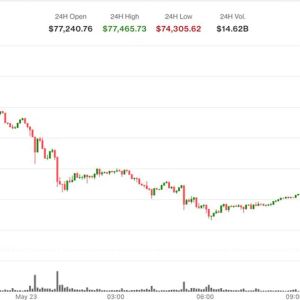
Bitcoin experienced a significant price decline, dropping to approximately US$74,305 in early Saturday trading. This marked its lowest point since 20 April, representing a roughly 10% reduction from its recent highs. The downturn appears to be a broader market correction after a period of sustained growth.
Contributing to this downward pressure was a substantial outflow from spot Bitcoin Exchange-Traded Funds (ETFs). These investment vehicles, which allow traditional investors to gain exposure to Bitcoin without directly owning the cryptocurrency, saw net outflows totalling US$2.26 billion. Such significant redemptions from institutional investment products often signal a shift in investor sentiment.
The timing of these events coincided with the US Securities and Exchange Commission (SEC) granting approval for Nasdaq to offer options trading on Bitcoin ETFs. While this development expands accessibility and potential hedging strategies for institutional players, its immediate impact on Bitcoin's price was overshadowed by the ETF outflows and broader market dynamics.
Why it matters for Australian investors
For Australian investors, Bitcoin's global price movements directly influence its valuation on local exchanges like CoinSpot, Independent Reserve, Swyftx, and BTC Markets. A global dip in Bitcoin's USD price directly translates to a lower AUD price, impacting the portfolios of many Australians who hold crypto assets. Understanding these international drivers is crucial for informed decision-making.
While Australia does not yet have spot Bitcoin ETFs, the US market developments provide a valuable precedent and insight into institutional engagement with crypto. The approval of options trading on these US ETFs suggests a further maturation of the asset class, which could eventually influence regulatory and product offerings here in Australia. It highlights the growing interconnectedness of global financial markets, with ripples extending to our shores.
Australian investors are also navigating their own unique regulatory landscape. The Australian Taxation Office (ATO) continues to refine its guidance on the tax treatment of cryptocurrencies, while AUSTRAC oversees anti-money laundering and counter-terrorism financing regulations for digital asset service providers. Market volatility, as seen with this Bitcoin dip, underscores the importance of understanding these local compliance requirements when managing crypto investments.
Impact on the AUD market
When Bitcoin's price falls globally, Australian dollar (AUD) denominated prices on local platforms will inevitably follow suit. This can lead to a decrease in the AUD value of Australian investors' Bitcoin holdings. For those looking to enter the market, a downturn might present an opportunity to buy at a lower AUD entry point, depending on their investment strategy and risk tolerance.
The volume and sentiment on Australian exchanges are closely tied to global trends. Significant outflows from US spot ETFs, even without direct Australian equivalents, can create a ripple effect. This global sentiment can influence buying and selling pressure within the Australian market, impacting liquidity and price discovery on local platforms regulated by entities like AUSTRAC.
Furthermore, the long-term impact of regulatory decisions in major markets, such as the SEC's approval of options trading, can set a global standard. While ASIC has a different mandate, observing these international moves helps Australian investors anticipate potential future developments in local financial product offerings and regulatory approaches to digital assets. This ongoing evolution requires Australian investors to remain informed and adaptive.
What to watch next
Looking ahead, Australian investors should closely monitor the net flows into and out of US spot Bitcoin ETFs. Continued significant outflows could signal sustained selling pressure, while a reversal to net inflows might indicate renewed institutional interest and potential price recovery. These global institutional movements often act as a barometer for broader market sentiment.
Another key area to observe is the long-term impact of options trading on Bitcoin ETFs in the US. The introduction of these sophisticated financial instruments could lead to increased institutional participation, potentially bringing greater liquidity and maturity to the market over time. Whether this translates into more stable price action or new forms of volatility remains to be seen.
Domestically, Australian investors should continue to pay attention to any updates from the ATO regarding crypto tax guidance and evolving regulatory positions from ASIC and AUSTRAC. Changes in local policy can significantly impact how Australian investors manage their digital assets, from reporting obligations to the types of investment products available. Staying informed on both global and local developments will be crucial for navigating the evolving crypto landscape.
Coins covered

Common questions
How does Bitcoin's price drop affect my Australian crypto exchange holdings?
A drop in Bitcoin's global price, typically quoted in US dollars, directly affects its value when converted to Australian dollars. This means the AUD value of your Bitcoin holdings on Australian exchanges like CoinSpot, Independent Reserve, Swyftx, or BTC Markets will likely decrease in line with the global market downturn.
Are there Bitcoin ETFs available for Australian investors, similar to those in the US?
Currently, Australia does not have spot Bitcoin Exchange-Traded Funds (ETFs) that directly hold Bitcoin, similar to those recently approved in the US. However, there are some exchange-traded products (ETPs) available on Australian exchanges that offer indirect exposure to cryptocurrencies, often through funds holding Bitcoin futures or other crypto-related assets.
What Australian regulations should I be aware of when investing in cryptocurrency?
Australian investors should be aware of a few key regulatory bodies. The Australian Taxation Office (ATO) provides guidance on the tax treatment of cryptocurrency as an asset. AUSTRAC regulates digital currency exchanges and other crypto businesses for anti-money laundering (AML) and counter-terrorism financing (CTF) purposes. ASIC also plays a role in overseeing financial products and services, including those involving digital assets, to protect consumers.
Bitcoin drops as US Spot ETFs see $2.26B outflows. CoinPulse AU analyses the impact for Australian investors, local markets, and what's next for crypto down u