
Bitcoin could be heading much lower, fund manager warns as $150 billion Treasury operation nears
What happened
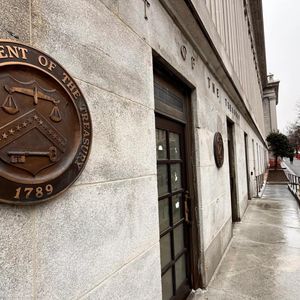
Prominent fund manager, Michael Kramer, recently issued a caution that Bitcoin's price could experience a significant downturn. His analysis points to an impending $150 billion liquidity drain stemming from upcoming U.S. Treasury operations. This anticipated shift in global capital flows could have a cascading effect across various asset classes, including cryptocurrencies.
Kramer's concern centres on the substantial amount of liquidity expected to be withdrawn from the financial system. Such large-scale operations by the U.S. Treasury typically involve the issuance of new debt, effectively drawing cash out of circulation. Historically, tightening liquidity conditions have often coincided with downward pressure on risk assets, a category that includes digital currencies like Bitcoin.
While the direct impact on the crypto market isn't always immediate or straightforward, a reduction in overall market liquidity can reduce investor appetite for more speculative assets. As traditional financial markets adjust to these changes, the ripple effects can extend to the decentralised finance (DeFi) ecosystem and beyond. The sheer scale of the proposed $150 billion operation is what has captured the attention of many market observers.
This isn't an isolated concern, as many analysts closely monitor macroeconomic indicators, particularly those originating from the world's largest economies. U.S. monetary and fiscal policies frequently set the tone for global financial markets. Therefore, any major operations like Treasury issuance are scrutinised for their potential to influence investment decisions worldwide.
Why it matters for Australian investors
For Australian crypto investors, this warning from a fund manager highlights the interconnectedness of global financial markets. While specific U.S. Treasury operations might seem geographically distant, their impact on global liquidity can directly influence the AUD-denominated price of Bitcoin and other cryptocurrencies. A significant downward movement in Bitcoin's USD price typically translates to a similar movement when converted to Australian dollars.
Australian investors holding Bitcoin or other digital assets on platforms like CoinSpot, Independent Reserve, Swyftx, or BTC Markets should be aware of these broader macroeconomic forces. Their portfolios are not immune to global liquidity shifts, and understanding these trends can help inform investment strategies. It underscores the importance of a global perspective when investing in a borderless asset class like cryptocurrency.
Furthermore, any substantial market volatility, whether up or down, can have implications for compliance and tax obligations. The Australian Taxation Office (ATO) views cryptocurrency as property for capital gains tax purposes. Significant price movements can trigger taxable events for investors who actively trade or sell their holdings, making it crucial to track cost bases and disposal prices accurately during periods of market fluctuation.
Local regulatory bodies like ASIC and AUSTRAC are primarily focused on consumer protection and anti-money laundering. While they don't directly comment on market price movements, a volatile market environment can sometimes lead to increased scrutiny on exchange operations and investor conduct. This global market signal serves as a reminder to conduct thorough due diligence and manage risk appropriately.
Impact on the AUD market
The Australian dollar (AUD) often acts as a proxy for global risk sentiment. When global liquidity tightens and risk assets face pressure, the AUD can also experience fluctuations against major currencies like the US dollar. This dynamic introduces another layer of complexity for Australian crypto investors. A decline in Bitcoin's USD price, combined with potential AUD depreciation against the USD, could amplify losses when converting crypto assets back to AUD.
Conversely, if the AUD strengthens during risk-off periods, it could partially offset some of the USD-denominated losses for Aussie investors. However, the primary driver for AUD crypto prices will remain the global USD-denominated price of Bitcoin. Australian crypto exchanges typically derive their AUD pricing from international spot markets, adjusting for local liquidity and trading volumes.
Local trading volumes on Australian platforms might also see changes during periods of heightened global uncertainty. Some investors might choose to de-risk and convert holdings to fiat, while others might view dips as buying opportunities. These shifts in sentiment can affect liquidity on local exchanges, potentially leading to wider bid-ask spreads for brief periods.
It's important for Australian investors to monitor not just the Bitcoin USD price, but also the AUD/USD exchange rate. The interplay between these two factors ultimately determines the Australian dollar value of their cryptocurrency holdings. Diversifying portfolios and understanding personal risk tolerance are crucial considerations in such dynamic market conditions.
What to watch next
The immediate focus for investors will be on the actual implementation and market reaction to the U.S. Treasury's operations. The timeline and scale of these liquidity drains will be critical data points. Analysts will be closely watching for any signs of stress in traditional financial markets, as these often precede or coincide with significant moves in the crypto space.
Beyond the immediate Treasury operations, investors should also monitor broader macroeconomic indicators. Inflation data, central bank policy statements (particularly from the U.S. Federal Reserve), and global economic growth forecasts will continue to exert significant influence. Any shifts in these data points could alter the market's trajectory, irrespective of short-term liquidity events.
Keep an eye on key technical levels for Bitcoin on global charts. While fundamental factors drive long-term value, technical analysis can provide insights into potential support and resistance levels during periods of volatility. Observing how Bitcoin reacts to major price points could offer clues about market sentiment and future direction.
Finally, the actions of institutional investors and large holders, often referred to as 'whales', will be worth watching. Their large trades can significantly impact market prices. Tools that track on-chain movements and exchange flows can provide some early indications of major institutional activity, which could offer Australian investors additional context for their own decision-making.
Coins covered


Common questions
How does U.S. Treasury activity affect my Bitcoin holdings on an Australian exchange?
U.S. Treasury operations, such as large debt issuances, can reduce global market liquidity. Bitcoin's price is predominantly set in U.S. dollars globally. A reduction in global liquidity can put downward pressure on Bitcoin's USD price, which then directly impacts its Convert to AUD value on Australian exchanges like CoinSpot or Swyftx.
What are the common risks for Australian crypto investors during periods of high market volatility?
During high volatility, Australian crypto investors face risks like rapid depreciation of their holdings, potential for increased slippage on trades, and amplified stress on their capital gains tax obligations with the ATO if they're actively trading. It's crucial to manage risk and understand that past performance doesn't guarantee future results.
Should I be concerned about tax implications if Bitcoin's price drops significantly?
A significant price drop could lead to unrealised losses. For tax purposes in Australia, you generally only incur a capital gains or capital loss event when you dispose of your cryptocurrency (e.g., sell it, trade it for another crypto, or use it to buy goods/services). If you realise a loss, it can be used to offset capital gains in the same financial year or carried forward to future years, which the ATO requires you to declare.
A major $150 billion U.S. Treasury operation could drain liquidity and impact Bitcoin prices. Australian investors need to understand how global financial shi