
Bitcoin Breaks Below $70K as Mt. Gox Moves $739M and Strategy Sells 32 BTC
What happened
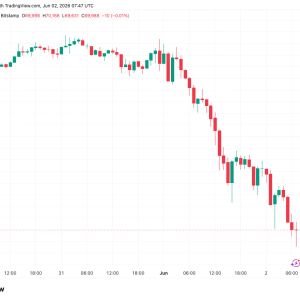
Bitcoin breached the significant $70,000 threshold on Tuesday, marking its first dip below this level in nearly two months. The cryptocurrency recorded a fresh local low of $69,631, indicating a notable increase in selling pressure across the market. This movement has sent ripples through the digital asset space, prompting widespread discussion and analysis.
The downturn coincided with significant movements from Mt. Gox, the historical cryptocurrency exchange. Rehabilitation trustee movements saw approximately 141,686 BTC, valued at over US$9 billion, transferred to a new wallet. These substantial transfers are widely speculated to be in preparation for the repayment of long-standing creditors.
Simultaneously, a prominent corporate holder of Bitcoin, MicroStrategy, confirmed a sale of 32 BTC. This move was undertaken to cover administrative fees related to a recent convertible note offering. While the amount is relatively small in the grand scheme of the market, it adds to the narrative of selling activity and its confluence with other major movements.
Historically, announcements regarding Mt. Gox repayments have often preceded periods of market volatility or price corrections. The psychological impact of such large sums potentially entering circulation, even if distributed over time, can contribute to investor caution and price apprehension. This combination of factors appears to have converged, contributing to the recent price action.
Why it matters for Australian investors
For Australian investors, Bitcoin's price movements have direct implications, particularly for those holding BTC or considering new entries into the market. While prices on Australian exchanges like CoinSpot, Independent Reserve, Swyftx, and BTC Markets are typically quoted in AUD, they closely track the global USD price, adjusted for exchange rates. A dip in the USD price naturally translates to a lower AUD price, affecting portfolio valuations.
The potential influx of Mt. Gox BTC into the market, even if phased, could introduce a supply-side shock. Australian investors should carefully consider how this might influence short-to-medium term price dynamics. While many original Mt. Gox creditors may be long-term holders, the mere possibility of significant selling can create headwinds for price appreciation.
Taxation remains a crucial aspect for Australian crypto investors. The Australian Tax Office (ATO) treats cryptocurrencies as property for capital gains tax purposes. Any selling activity, whether to take profits or cut losses, triggers a capital gains or losses event. Investors should maintain meticulous records of their trades, including acquisition costs and disposal prices, which become even more critical during periods of market fluctuation.
Furthermore, the transparency and regulatory framework within Australia, enforced by bodies like AUSTRAC for anti-money laundering (AML) and counter-terrorism financing (CTF) compliance, provide a level of oversight. However, these regulations do not insulate investors from market volatility stemming from global events such as the Mt. Gox repayments. Investors are consistently reminded that, unlike traditional financial products, ASIC does not regulate cryptocurrencies directly as financial products, highlighting the inherent risks.
Impact on the AUD market
When Bitcoin experiences a significant price drop, its impact reverberates across the broader cryptocurrency market, including directly affecting AUD-denominated trading pairs. Australian exchanges typically offer BTC/AUD pairs, and a global downturn will see these pairs reflect the depreciation. This means a holding of 1 BTC denominated in AUD will be worth less, impacting the overall market capitalisation for Australian crypto investors.
The sentiment shift resulting from such a price move can also influence trading behaviour on Australian platforms. Increased selling pressure globally often leads to similar trends locally, as investors react to news and market conditions. This can manifest as higher sell volumes or a pullback in buying interest on platforms accessible to Australian users.
While the Mt. Gox transfers are a global event, their implications for supply affect all markets, including the AUD one. If a large number of rehabilitated creditors from Australia or other regions decide to sell their recovered BTC, this could add to sell-side pressure. The exact timing and distribution method for these repayments are still under wraps, but the market is clearly reacting to the anticipation.
It's important to remember that the Australian crypto market, while connected to global trends, also has its unique characteristics. Local demand, regulatory developments, and the behaviour of Australian institutional investors can also play a role. However, for a major event like Bitcoin breaching a key psychological level due to significant global movements, the AUD market tends to follow suit fairly closely.
What to watch next
Investors should closely monitor further announcements from the Mt. Gox rehabilitation trustee regarding the timeline and mechanics of creditor repayments. Any clarity on whether repayments will be in BTC, fiat, or a combination, and how frequently they will occur, could significantly influence market behaviour. A phased approach is generally considered less disruptive than a lump sum distribution.
Secondly, observe Bitcoin's ability to reclaim and sustain above the $70,000 level. This psychological and technical resistance point will be a key indicator of market strength and investor confidence. A quick recovery could signal resilience, while prolonged consolidation below this mark might suggest continued bearish sentiment.
Furthermore, keep an eye on broader macroeconomic indicators. Global interest rate decisions, inflation data, and geopolitical events can all influence investor appetite for risk assets like Bitcoin. The narrative around Bitcoin as a hedge against inflation or a safe-haven asset can shift dramatically based on these external factors, affecting its performance in AUD terms.
Finally, continued observation of institutional activity, particularly from large holders like MicroStrategy, is advisable. While their recent sale was for administrative purposes, their ongoing strategy and any significant accumulation or distribution could provide insights into institutional sentiment. Australian investors should also look for any shifts in sentiment or trading volumes on local exchanges as a proxy for domestic market health and participation.
Coins covered

Common questions
How does Bitcoin's price drop affect my crypto holdings on Australian exchanges?
A drop in Bitcoin's global price typically translates to a lower AUD value for your holdings on Australian exchanges like CoinSpot, Independent Reserve, Swyftx, and BTC Markets. Your portfolio's overall value will decrease, reflecting the change in the AUD-denominated price of Bitcoin.
What are the tax implications for Australian investors if Bitcoin's value changes significantly?
For Australian investors, any disposal of Bitcoin, whether selling for a profit or a loss, triggers a capital gains tax (CGT) event according to the ATO. It is crucial to keep accurate records of your purchase price, date, and sale price to calculate your capital gain or loss correctly for tax purposes. A significant value change means the potential gains or losses can be substantial.
Is the Australian crypto market regulated against sudden large-scale sell-offs like from Mt. Gox repayments?
While Australian crypto exchanges operate under AUSTRAC's Anti-Money Laundering and Counter-Terrorism Financing (AML/CTF) regulations, and ASIC provides consumer protection guidance, there isn't specific regulation designed to prevent or mitigate market price impacts from large-scale global events like Mt. Gox repayments. Crypto markets are largely driven by global supply and demand, and prices can be volatile. Investors should be aware that ASIC does not regulate cryptocurrencies directly as financial products, meaning standard financial product protections do not apply.
Bitcoin dips below $70K after Mt. Gox moves $9B. This CoinPulse AU analysis explores the impact for Australian investors, AUD market, and what to watch next.