
$1.2B Liquidated as Bitcoin Tests $62.5K Support Amid Sharp Crypto Selloff
What happened
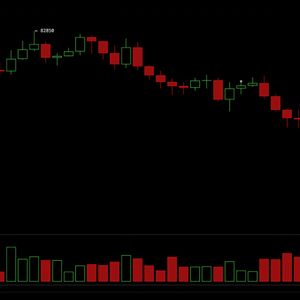
The cryptocurrency market experienced a significant downturn earlier this week, leading to the liquidation of a substantial amount of leveraged positions. Bitcoin, the flagship digital asset, tested critical support levels around the US$62,500 mark after a sharp sell-off. This market event saw over US$1.2 billion in leveraged crypto positions wiped out within a 24-hour period, according to data from analytics platforms like Coinglass.
The vast majority of these liquidations were attributable to ‘long’ positions, meaning traders who had bet on price increases. Approximately US$949 million of these long positions were forcibly closed, absorbing the brunt of the market’s volatility. This indicated a strong downward price movement that caught many optimistic traders off guard, highlighting the inherent risks associated with high-leverage trading in volatile markets.
Simultaneously, ‘short’ positions, which profit from price declines, also saw liquidations, albeit to a lesser extent, totalling around US$174 million. This suggests that while the prevailing trend was negative, there were still pockets of upward price movements or attempts at short squeezes that also caught some traders on the wrong side. The broad market correction extended beyond Bitcoin, impacting the wider altcoin ecosystem and resulting in a significant deleveraging event across the industry.
Why it matters for Australian investors
For Australian crypto investors, sudden market corrections like this one serve as a crucial reminder of the volatility inherent in digital assets. While Bitcoin's price movements are denominated in USD globally, Australian investors buying BTC on local exchanges like CoinSpot, Independent Reserve, Swyftx, or BTC Markets would see their AUD-denominated portfolios fluctuate in line with these international price shifts, albeit with an additional layer of AUD/USD exchange rate consideration.
These events underscore the importance of risk management strategies, particularly for those utilising leverage. ASIC, Australia's corporate regulator, has previously issued warnings regarding the risks of leveraged trading in contracts for difference (CFDs) and other complex financial products, including those referencing cryptocurrencies. While direct crypto leverage laws differ, the principle of prudent risk assessment remains paramount for Australian investors.
Furthermore, the Australian Taxation Office (ATO) views cryptocurrency as property for capital gains tax (CGT) purposes. Significant price movements, whether up or down, can trigger CGT events when assets are sold, traded, or disposed of. Investors need to maintain accurate records of their crypto transactions to ensure compliance with ATO regulations, especially after periods of high market activity and potential capital losses or gains.
Impact on the AUD market
A global crypto market downtrend invariably impacts the Australian dollar (AUD) cryptocurrency market. When Bitcoin's value drops, the AUD price of Bitcoin and other cryptocurrencies also declines. This means that Australian investors holding these assets would see the value of their holdings decrease in AUD terms, regardless of whether they actively traded during the sell-off.
Australian cryptocurrency exchanges would likely experience increased trading volume during such periods, as investors either sell to cut losses, buy the dip, or simply rebalance their portfolios. Gateways for AUD deposits and withdrawals through banks may face higher traffic. While AUSTRAC, Australia’s financial intelligence agency, focuses on anti-money laundering and counter-terrorism financing (AML/CTF), the increased transaction volume during volatile periods highlights the importance of robust compliance frameworks within Australian crypto service providers.
More broadly, investor sentiment in Australia can be affected. Sharp declines may lead some newer investors to question the long-term viability of their investments, while experienced traders might view it as a buying opportunity. The overall market sentiment can influence future investment decisions and potentially impact the growth trajectory of the Australian crypto sector.
What to watch next
Moving forward, Australian investors should closely monitor Bitcoin’s ability to hold critical support levels. Sustained trading below key psychological and technical price points could signal further downside potential, while a swift recovery might indicate resilience. Global macroeconomic factors, such as inflation data, interest rate decisions by major central banks, and geopolitical events, continue to exert significant influence over the broader crypto market.
Domestically, regulatory developments remain a key area of focus. ASIC and the Australian government continue to work towards clearer frameworks for digital assets. Any new guidance or legislation could impact how cryptocurrencies are offered, traded, and held within Australia, affecting local exchanges and investors alike. Staying informed about these regulatory changes is crucial for navigating the evolving Australian crypto landscape.
Furthermore, observe the overall sentiment in the market. A prolonged period of fear or uncertainty could lead to slower adoption and investment flows. Conversely, signs of institutional re-engagement or positive news regarding technological advancements within the crypto space could reignite bullish sentiment. As always, diversification and a long-term perspective are vital considerations for Australian investors navigating the dynamic world of digital assets.
Coins covered

Common questions
How does a global Bitcoin price dip affect my crypto holdings on Australian exchanges?
When Bitcoin's price drops internationally, the AUD value of your Bitcoin and other cryptocurrencies held on Australian exchanges like CoinSpot, Independent Reserve, or Swyftx will also decrease. This is because Australian crypto prices are typically derived from global market rates, converted to AUD.
What are the tax implications in Australia if I sell my crypto during a market downturn?
In Australia, selling crypto, even during a market downturn, is considered a 'disposal' for capital gains tax (CGT) purposes by the ATO. If you sell at a loss, you might be able to use that capital loss to offset capital gains from other crypto or investments. It's crucial to keep accurate records of all your transactions for tax reporting.
What does 'liquidation' mean for an Australian investor not using leverage?
For an Australian investor who is not using leverage (i.e., not borrowing funds to amplify their trading positions), 'liquidation' as described in the market analysis generally refers to the forced closure of leveraged positions. If you hold your crypto directly, a market downturn will reduce the value of your assets, but your holdings won't be 'liquidated' unless you have specific lending or borrowing arrangements that trigger such events.
Sharp crypto sell-off wiped over US$1.2B, testing Bitcoin's support. CoinPulse AU analysis for Australian investors on market impact & what's next.