
ZEC Hits $686 Amid $28M Liquidations as Analyst Warn of Coordinated Squeeze
AI-summarised from reporting by Bitcoin.com. How we use AI.
What happened
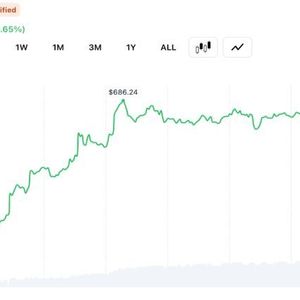
Zcash (ZEC), a prominent privacy coin, experienced a remarkable surge, jumping over 17% in a mere six hours. This rapid ascent saw ZEC reach a new year-to-date high, pushing its monthly gains beyond 90%. The rally also elevated its market capitalisation above the $11 billion mark, surpassing its rival, Monero (XMR), in this metric.
This dramatic price movement coincided with significant liquidation events across the market. Reports indicate approximately $28 million in liquidations occurred during ZEC's upward trajectory, suggesting a pronounced short squeeze. Typically, a short squeeze is triggered when a rapidly appreciating asset forces short sellers to buy back positions to cover potential losses, further fuelling the price increase.
Market watchers and analysts have pointed to the possibility of a coordinated squeeze. Such an event would involve a deliberate effort by a group of investors to drive up the price of an asset, exploiting high short interest. For Zcash, this rapid price action created substantial volatility, affecting leveraged positions across various exchanges.
Why it matters for Australian investors
For Australian investors, the volatility surrounding Zcash highlights both the opportunities and the inherent risks within the broader cryptocurrency market. While ZEC isn't consistently among the top traded assets on Australian platforms like CoinSpot, Independent Reserve, Swyftx, or BTC Markets, its dramatic price action can influence sentiment across the altcoin space. Local investors holding ZEC, directly or indirectly through diversified portfolios, would have seen significant paper gains or losses during this period.
Privacy coins like Zcash have historically faced scrutiny from regulators globally, including in Australia. Organisations such as AUSTRAC monitor transactions closely for anti-money laundering (AML) and counter-terrorism financing (CTF) purposes. While Zcash itself is not prohibited, the use of privacy-enhancing features can complicate compliance for exchanges and users, potentially impacting liquidity and trading pairs available on Australian platforms.
Australian tax obligations, as outlined by the ATO, remain paramount. Any capital gains realised from the sale of ZEC or other cryptocurrencies, regardless of the cause for the price movement, are subject to capital gains tax (CGT). Investors should maintain accurate records of their crypto transactions, particularly during periods of high volatility, to ensure compliance with ATO guidelines.
Impact on the AUD market
The immediate impact of ZEC's surge on the Australian Dollar (AUD) directly is likely minimal, given Zcash's relative market size compared to Bitcoin or Ethereum. However, significant volatility in any major altcoin can ripple through the broader crypto market, indirectly affecting the AUD pair for larger cryptocurrencies. If a short squeeze in one asset sparks wider market enthusiasm or fear, it can lead to increased trading volumes across all crypto-AUD pairs.
Australian crypto exchanges operate under strict regulatory oversight. While ASIC primarily focuses on consumer protection and financial services, AUSTRAC's role in AML/CTF is critical. The nature of privacy coins means exchanges offering Zcash must robustly implement identification and verification processes. This can sometimes lead to fewer AUD trading pairs for such assets compared to more transparent cryptocurrencies. The recent events may prompt further internal reviews by Australian exchanges on their offerings of privacy-focused assets.
Furthermore, sentiment plays a crucial role. A successful short squeeze can generate significant media attention, potentially drawing new retail investors into the Australian crypto market. Conversely, if such events lead to widespread liquidations and losses, it could dampen investor confidence, affecting overall trading volumes and the AUD liquidity for various digital assets.
What to watch next
Investors should closely monitor Zcash's price action for signs of stability or further volatility. Short squeezes can be short-lived, often followed by a significant correction once the immediate buying pressure subsides. Understanding whether the recent gains are sustainable or merely a temporary market anomaly driven by technical factors will be key. Look for trading volumes – a sustained downturn in volume after the squeeze could indicate the momentum is fading.
Beyond Zcash itself, the broader regulatory landscape for privacy coins warrants attention. As global regulators continue to grapple with digital asset oversight, any shifts in their stance on privacy features could impact Zcash’s long-term viability and availability on mainstream exchanges. Australian investors should stay informed about any updates from AUSTRAC or ASIC regarding the treatment of such assets.
Finally, observe the reaction of other altcoins, particularly those with high short interest or similar market dynamics. A coordinated squeeze in one asset could inspire similar attempts in others. Diversification and risk management remain critical during periods of heightened market volatility. Australian investors are advised to conduct thorough research and consider their individual risk tolerance before making any investment decisions, remembering that past performance is not indicative of future results.
Coins covered




Common questions
Is Zcash (ZEC) legal to buy and sell in Australia?
Yes, Zcash (ZEC) is legal to buy and sell in Australia. While privacy coins can present regulatory complexities, ZEC is available on some Australian cryptocurrency exchanges. Investors must still comply with ATO tax obligations and exchanges must adhere to AUSTRAC's Anti-Money Laundering and Counter-Terrorism Financing (AML/CTF) regulations.
How does ATO treat Zcash (ZEC) for tax purposes in Australia?
The Australian Taxation Office (ATO) treats Zcash (ZEC) like other cryptocurrencies for tax purposes. Any capital gains or losses realised from selling, swapping, or using ZEC are subject to Capital Gains Tax (CGT). Transaction records are crucial for accurate tax reporting.
Can Australian investors use AUD to buy Zcash (ZEC) on local exchanges?
Some Australian cryptocurrency exchanges like CoinSpot or Swyftx may offer Zcash (ZEC) trading pairs against AUD, allowing investors to directly purchase ZEC with Australian Dollars. Availability can vary, and it's always best to check the specific exchange's current listings and supported fiat pairs.
Zcash (ZEC) soared over 17% amid a short squeeze. CoinPulse AU analyses the implications for Australian investors, tax, and the local crypto market.
About this article: this is an AI-generated summary of reporting by Bitcoin.com. It has not been reviewed by a human editor. We use AI to localise crypto news for Australian readers, and we link back to the original source so you can verify the facts.
Informational only — not financial advice. Always do your own research. Read our AI & editorial policy →