
Vitalik Buterin says AI 'formal verification' could actually make crypto much more secure
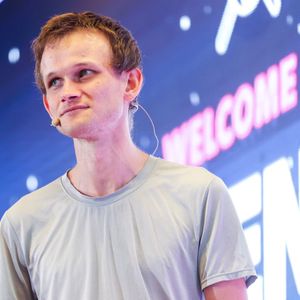
What happened
Ethereum co-founder Vitalik Buterin recently explored the potential of Artificial Intelligence (AI) in bolstering cryptocurrency security. In a thought-provoking blog post, Buterin articulated how AI-assisted "formal verification" could emerge as a cornerstone for cybersecurity within the blockchain ecosystem. This concept, often employed in high-stakes software development, scrutinises code with mathematical rigour to prove its correctness and absence of vulnerabilities.
Buterin's insights suggest a future where AI plays a pivotal role in identifying flaws that human auditors might miss. Formal verification, at its core, involves creating mathematical models of software and then using automated tools to prove that these models behave as expected under all possible conditions. The application of AI here would be to enhance the efficiency and scalability of this verification process, making it more accessible for complex smart contracts.
The increasing complexity of decentralised applications (dApps) and smart contracts has amplified the risk of exploits. Buterin highlighted that even a single bug in a smart contract can lead to devastating financial losses, as evidenced by numerous high-profile hacks in recent years. AI's capacity to process vast amounts of code and logic could offer a powerful defense mechanism against such vulnerabilities, potentially ushering in a new era of proactive security measures.
He argued that while AI itself introduces new challenges, its capabilities in analysing and verifying code could far outweigh these risks when applied to cybersecurity. This isn't about AI writing the code directly, but rather acting as an advanced assistant to ensure the integrity and robustness of the underlying programming that underpins our digital assets.
Why it matters for Australian investors
For Australian investors navigating the often-volatile cryptocurrency market, security is paramount. The prospect of AI-enhanced formal verification, as championed by Buterin, could significantly mitigate the risks associated with smart contract vulnerabilities. This is particularly relevant as more Australians engage with decentralised finance (DeFi) protocols and other blockchain-based applications, which heavily rely on complex smart contracts.
Improved security directly translates to greater confidence in the integrity of digital assets. While Australian platforms like CoinSpot, Independent Reserve, Swyftx, and BTC Markets employ robust security measures for their centralised operations, the underlying smart contracts of the cryptocurrencies they list are a different frontier. Enhanced security at the protocol level would indirectly benefit investors using these exchanges, as it reduces the systemic risk of major hacks affecting the broader market.
Furthermore, the Australian Taxation Office (ATO) views cryptocurrency as property for capital gains tax purposes. A more secure ecosystem reduces the likelihood of catastrophic losses due to hacks, which can complicate tax reporting and lead to significant financial setbacks for investors. Greater security fosters a more stable environment, facilitating long-term investment strategies and potentially attracting a broader range of participants into the Australian crypto market.
The development of more secure blockchain infrastructure also aligns with the Australian government's increasing focus on digital asset regulation through bodies like AUSTRAC and ASIC. A robust, well-secured decentralised space could potentially influence future regulatory frameworks, fostering an environment of trust and compliance, which is beneficial for both investors and the industry.
Impact on the AUD market
While AI-assisted formal verification doesn't directly influence the Australian dollar's exchange rate against cryptocurrencies, its indirect impact on trust and stability within the global crypto market is significant. A more secure crypto ecosystem reduces the incidence of major exploits that can trigger widespread panic and sell-offs. Such events often cause a ripple effect, impacting the value of various digital assets, and consequently, their AUD valuation on local exchanges.
Increased security could encourage greater institutional and retail adoption in Australia. As confidence in blockchain technology grows, more Australian capital may flow into the crypto space, potentially increasing liquidity and depth in the AUD crypto market for various assets. This could lead to more stable pricing and reduced volatility for cryptocurrencies traded against the AUD.
Moreover, a highly secure blockchain environment could attract more innovation and development to Australia. Local start-ups and developers might be more inclined to build on robust, verifiable platforms, potentially leading to new blockchain-based services and products. This economic activity could further solidify Australia's position in the global digital economy, indirectly bolstering confidence in related financial sectors.
The ongoing regulatory efforts by ASIC and AUSTRAC aim to safeguard Australian investors. If the global crypto landscape becomes demonstrably more secure through innovations like AI-assisted formal verification, it could streamline the regulatory process, as many of the risks currently being addressed would be significantly diminished at the protocol level. This could foster a more harmonised and less adversarial relationship between innovators and regulators.
What to watch next
Australian investors should closely monitor developments in AI's application to blockchain security. Key areas to observe include proof-of-concept projects that demonstrate successful AI-driven formal verification of smart contracts. The adoption of these tools by major blockchain protocols and decentralised application developers will be a crucial indicator of widespread impact.
Keep an eye on announcements from prominent blockchain security firms and academic institutions researching this intersection of AI and cryptography. Any breakthroughs in making formal verification more scalable and less resource-intensive via AI will be particularly noteworthy. Such advancements could accelerate its integration into the development lifecycle of smart contracts.
Furthermore, observe how leading Australian crypto exchanges and investment platforms respond to these security enhancements. While their direct involvement in formal verification might be limited, their communication regarding overall market security and their support for tokens built on verified protocols will be important. Look for discussions around industry standards and best practices for smart contract auditing that incorporate AI components.
Finally, consider the broader implications for decentralised autonomous organisations (DAOs) and other decentralised governance models. Enhanced security empowers these organisations to manage significant treasuries and complex operations with reduced risk of exploit, potentially leading to more stable and robust decentralised economies that Australian investors can participate in with greater peace of mind. The evolution of this technology will shape the future security landscape of the entire crypto space, directly influencing investor confidence and market stability.
Coins covered


Common questions
What is formal verification and why is Vitalik Buterin discussing it in relation to Australian crypto security?
Formal verification is a method of mathematically proving the correctness of software, ensuring it behaves as expected under all conditions. Vitalik Buterin's discussion centres on AI enhancing this process for blockchain smart contracts. For Australian investors, enhanced security at the code level means reduced risk of hacks and exploits, providing greater confidence when engaging with cryptocurrencies and DeFi applications, which is crucial for managing investments and tax obligations with the ATO.
How would AI-assisted crypto security impact my investments on Australian exchanges like CoinSpot or Swyftx?
While Australian exchanges like CoinSpot or Swyftx maintain their own robust security, AI-assisted formal verification improves the security of the underlying blockchain protocols and smart contracts that these exchanges list. Stronger protocol-level security reduces the systemic risk of major hacks affecting the broader crypto market, which can indirectly protect your portfolio from market-wide downturns caused by security incidents. This creates a more stable trading environment for AUD-denominated crypto assets.
Could improved crypto security affect how the ATO views my crypto holdings?
Improved crypto security, by reducing the prevalence of hacks and losses, could lead to a more stable and mature cryptocurrency market. While the ATO's tax treatment of cryptocurrency as property for capital gains tax purposes remains unchanged, a more secure ecosystem means investors are less likely to incur significant losses due to exploits, which can simplify tax reporting and reduce the likelihood of complicated scenarios involving stolen or lost assets, ultimately providing a clearer picture for compliance.
Vitalik Buterin's insights on AI-assisted formal verification could revolutionise crypto security. Discover what this means for Australian investors, AUD mark