
Top Non-Custodial Crypto Wallets of May 2026: IronWallet vs Trust Wallet vs Phantom
AI-summarised from reporting by Crypto Daily. How we use AI.
What happened
The non-custodial crypto wallet landscape has undergone significant transformation in early 2026, driven by advancements in user experience and privacy. Three major industry shifts have redefined user expectations: the maturation of retail crypto payments, widespread implementation of gas abstraction technologies, and the rise of privacy-first signup processes.
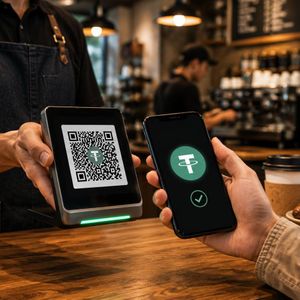
Retail crypto payments have moved beyond experimental stages, with standards like WalletConnect Pay now operational and integrated with major payment infrastructure providers such as Ingenico and iMin POS. This allows users to pay merchants directly from their non-custodial wallets using stablecoins, a significant stride towards mainstream adoption. Wallets like IronWallet have embraced this, offering direct payment capabilities.
Gas abstraction, a critical development for usability, has also reached production maturity. Technologies such as EIP-7702 paymaster infrastructure enable gasless transactions, where network fees are either sponsored by the wallet provider or deducted directly from the stablecoin being transferred. IronWallet offers gasless USDT on Tron and USDC on Ethereum, while Trust Wallet sponsors gas for swaps on various networks, simplifying the user experience and reducing barriers to entry.
Lastly, privacy-first signup has emerged as a key differentiator. While some wallets offer social login options, a new breed of wallets, notably IronWallet, has adopted a stringent no-KYC approach, requiring no personal identification at any step. Trust Wallet and Phantom also forgo KYC at signup but provide optional social login for convenience, offering a spectrum of privacy choices for users.
Why it matters for Australian investors
These developments in non-custodial wallets offer tangible benefits and considerations for Australian crypto investors. The enhanced retail payment capabilities, for instance, could pave the way for more widespread acceptance of cryptocurrencies for everyday transactions within Australia. While direct integration with Australian retailers is still evolving, the global infrastructure being laid through WalletConnect Pay means Australian users could eventually use stablecoins from their non-custodial wallets – potentially backed by AUD – for purchases, bypassing traditional payment rails.
The maturation of gas abstraction is particularly relevant for Australian investors keen on minimising transaction costs. High gas fees have historically been a hindrance for smaller transactions, deterring new users. Features like gasless stablecoin transfers and sponsored swaps make crypto more accessible and cost-effective, broadening the appeal of decentralised finance (DeFi) and general crypto usage. This could encourage greater participation from Australian investors who have previously been wary of unpredictable transaction costs.
Furthermore, the focus on privacy-first signup aligns with a growing global sentiment for data protection. For Australian investors, the option of using a non-custodial wallet that requires no personal identification at signup provides an alternative to exchanges, many of which must adhere to AUSTRAC's stringent KYC/AML regulations. While this offers a degree of privacy from initial onboarding, investors should remember that any transactions involving fiat on Australian exchanges like CoinSpot, Independent Reserve, Swyftx, or BTC Markets will still require identity verification. The ATO’s tax treatment of crypto assets also remains an obligation, regardless of wallet type.
Impact on the AUD market
While the direct impact on the Australian dollar (AUD) market isn't immediate, these advancements lay groundwork for future integration. Increased ease of use and reduced friction in transactions could lead to greater utilisation of stablecoins as a medium of exchange, potentially including AUD-backed stablecoins if they gain traction. Should Australian businesses begin adopting WalletConnect Pay or similar standards, it could create a new stream for digital payments that bypasses some traditional financial intermediaries, potentially influencing demand for fiat AUD in specific retail contexts.
From an investment perspective, the improved user experience of non-custodial wallets might attract more Australian retail investors into the crypto space. Lower barriers to entry, driven by gas abstraction and simplified interfaces, could see a greater inflow of AUD into various cryptocurrencies. Local exchanges would likely benefit from increased onboarding, even if assets are later moved to self-custody wallets.
However, it's crucial to distinguish between owning crypto in a non-custodial wallet and its broader economic impact on the national currency. While these wallets make crypto more practical for payments, they don't fundamentally change the regulatory or macroeconomic environment surrounding the AUD. The Australian Securities and Investments Commission (ASIC) continues to monitor the space, and any widespread use of stablecoins for everyday transactions would undoubtedly come under scrutiny regarding consumer protection and financial stability.
What to watch next
Australian investors should closely monitor the further integration of retail payment solutions. The adoption of WalletConnect Pay by Australian merchants or payment processors would be a significant milestone. Observing which stablecoins gain traction for these payments, particularly if AUD-pegged stablecoins emerge and achieve prominence, will be key. This could create new opportunities for converting AUD directly into a payment-ready digital asset within a non-custodial environment.
Continue to watch for new developments in gas abstraction and multi-chain support. Wallets that offer seamless, low-cost access across a wide array of blockchains—including those popular for DeFi and NFTs—will remain highly attractive. For Australian investors exploring decentralised applications, the ability to transact efficiently without worrying about complex gas fees across multiple networks will be a deciding factor.
Finally, the regulatory landscape regarding non-custodial wallets and privacy will be an ongoing point of interest. While current wallets offer privacy at signup, the Australian government, through AUSTRAC and ASIC, continues to scrutinise the broader crypto ecosystem for money laundering and consumer protection. Any shifts in how self-custody tools are regulated, or how transactions from them are monitored, could have implications for Australian users, necessitating a careful understanding of evolving compliance requirements.
Coins covered
 View solSolanasolLive price, charts & AUD analysis
 View ethEthereumethLive price, charts & AUD analysis
 View bnbBNBbnbLive price, charts & AUD analysis
 View usdcUSDCusdcLive price, charts & AUD analysis
 View btcBitcoinbtcLive price, charts & AUD analysis
 View twtTrust WallettwtLive price, charts & AUD analysis
 View trxTRONtrxLive price, charts & AUD analysis
 View avaxAvalancheavaxLive price, charts & AUD analysis
Common questions
Do I still need to pay tax on crypto if I use a privacy-focused non-custodial wallet in Australia?
Yes, regardless of the type of wallet you use (custodial or non-custodial) or its privacy features, the Australian Taxation Office (ATO) considers cryptocurrencies as assets. You are responsible for reporting capital gains or losses from crypto transactions and any income derived from crypto. Using a privacy-focused wallet does not exempt you from your tax obligations.
Can I use these new non-custodial wallets on Australian crypto exchanges like CoinSpot or Swyftx?
Non-custodial wallets are separate from crypto exchanges. You can transfer cryptocurrencies from your non-custodial wallet to an Australian exchange (like CoinSpot, Swyftx, Independent Reserve, or BTC Markets) to sell them for AUD, and vice versa. However, to interact with these exchanges, you will still need to complete their KYC/AML processes as required by AUSTRAC, regardless of your non-custodial wallet's signup process.
Are there any AUD-backed stablecoins I can use for gasless payments with one of these wallets in Australia?
While the article mentions gasless USDT and USDC transfers, the availability of prominent, widely adopted AUD-backed stablecoins for such payments is still evolving. Some projects are working on AUD-pegged stablecoins, but global standards like WalletConnect Pay primarily support major stablecoins like USDT and USDC. Australian investors should monitor the market for increased adoption and integration of AUD-backed stablecoins into these payment infrastructures.
Explore the latest in non-custodial crypto wallets for May 2026. Discover how gasless payments, privacy-first signups, and retail integration will impact Aust
About this article: this is an AI-generated summary of reporting by Crypto Daily. It has not been reviewed by a human editor. We use AI to localise crypto news for Australian readers, and we link back to the original source so you can verify the facts.
Informational only — not financial advice. Always do your own research. Read our AI & editorial policy →