
Tether Faces $344M Stablecoin Seizure Bid as Myanmar Eyes Death Penalty and CLARITY Act Advances
What happened
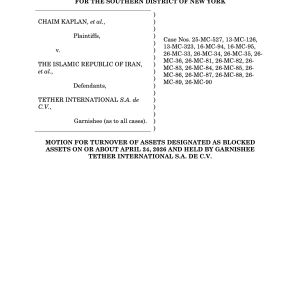
A situation is unfolding in the US legal landscape that could have significant implications for the broader cryptocurrency market, including Australian investors. A US law firm has reportedly escalated its efforts to seize a substantial amount of Tether (USDT), specifically targeting a sum exceeding US$344 million. This action is part of a broader legal campaign aiming to re-route frozen blockchain-based assets towards unrelated legal judgments.
The firm's strategy involves compelling Tether, the issuer of the world's largest stablecoin, to surrender these assets. This particular motion was filed on a Thursday, indicating a continued and concerted effort to pursue this legal avenue. The core of their argument appears to be that assets frozen on the blockchain, even if not directly linked to the judgment being enforced, should be made available to satisfy legal demands. This sets a potentially far-reaching precedent for how digital assets might be treated in global legal disputes.
Simultaneously, the article touches upon developments related to the CLARITY Act, a piece of proposed US legislation. While the source doesn't provide fine-grained details, the mention of the CLARITY Act advancing suggests an ongoing push for increased regulatory oversight and clarification within the US crypto space. This legislative movement, if successful, could introduce a clearer framework for how digital assets are classified and regulated, impacting everything from stablecoin operations to broader crypto market participation.
Further complicating the global crypto landscape, the source mentions Myanmar contemplating the death penalty for certain crypto-related offences. While distinct from the US legal action, it underscores the divergent and often severe approaches various jurisdictions are taking towards digital currencies. These developments collectively paint a picture of a rapidly evolving regulatory and legal environment for cryptocurrencies, with potential ramifications far beyond their immediate locales.
Why it matters for Australian investors
The developments in the US regarding Tether and the CLARITY Act are particularly pertinent for Australian investors due to the interconnected nature of the global crypto market. Tether (USDT) plays a foundational role in the crypto ecosystem, often serving as a primary trading pair on exchanges and a stable store of value for navigating market volatility. Any action that impacts Tether's operations or perceived stability could send ripples through the entire market.
Australian investors frequently use USDT on international and local exchanges like CoinSpot, Independent Reserve, Swyftx, and BTC Markets to facilitate trades, manage risk, or park funds between larger movements. A significant seizure or legal challenge against Tether could potentially affect its peg to the US dollar, even temporarily, leading to instability across pairs traded against it. This could present unexpected risks for Australian investors holding or trading USDT.
Furthermore, the CLARITY Act, though a US initiative, highlights a broader global trend towards increased crypto regulation. Australia's own regulatory bodies, such as ASIC and AUSTRAC, are actively working on frameworks for digital assets. The outcomes of US legislative efforts often inform or influence regulatory discussions in other developed nations. Australian investors should watch these global developments as they could foreshadow similar regulatory changes or increased scrutiny of crypto assets locally.
Taxation is another critical aspect for Australian investors, with the ATO providing guidance on how crypto is treated for capital gains tax purposes. Changes in the legal status or classification of stablecoins in major jurisdictions could eventually ripple down to how the ATO views such assets, potentially influencing compliance requirements or tax assessments for Australian holdings.
Impact on the AUD market
The Australian dollar (AUD) crypto market, while smaller than its US counterpart, is not insulated from global events. A major event impacting Tether's stability or market confidence could lead to a 'flight to quality' or, conversely, a rush to exit crypto positions into fiat on Australian exchanges. This could specifically affect AUD/crypto trading pairs, potentially increasing volatility or widening spreads during periods of uncertainty.
Australian exchanges offering USDT trading pairs might see increased trading activity or, depending on the severity of the news, withdrawal requests if investor confidence is shaken. While these exchanges are regulated and operate within Australian legal frameworks, the underlying assets they facilitate trading in are subject to global dynamics. The integrity of stablecoins like USDT is crucial for the efficient functioning of AUD-denominated crypto markets.
Any perceived risk to a major stablecoin could also lead to a shift in how Australian investors approach stablecoin usage. They might increasingly favour AUD-backed stablecoins, should they become more prevalent and liquid, or seek traditional fiat alternatives. This highlights the importance of liquidity and robust regulatory oversight for the stablecoin sector within the Australian market, ensuring consumer protection and market stability.
The broader regulatory push, as evidenced by the CLARITY Act, could also indirectly influence the AUD market. If global stablecoin regulations become more stringent, it could lead to increased compliance costs for international platforms, which might trickle down to users, including Australians. Conversely, greater regulatory clarity might foster more institutional participation and capital inflow into the Australian crypto space, potentially bolstering the AUD crypto market in the long term.
What to watch next
For Australian investors, closely monitoring the progression of the US law firm's legal challenge against Tether is paramount. The outcome could set a significant precedent for how digital assets, particularly stablecoins, are treated under various jurisdictions outside of their typical regulatory definitions. Key aspects to watch include any rulings from the courts regarding the seizure motion and Tether's official responses or counter-actions.
Equally important is the legislative journey of the CLARITY Act in the US. Its advancement and eventual details will provide insights into the future of stablecoin regulation and digital asset classification. This could offer a blueprint for similar legislative discussions in Australia and other nations, shaping the regulatory landscape for crypto in the years to come. Updates from US regulatory bodies like the SEC or Treasury will also be critical indicators.
Australian investors should also keep an eye on how local exchanges and regulators react to these international developments. Will platforms like CoinSpot, Independent Reserve, Swyftx, and BTC Markets issue advisories? Will AUSTRAC or ASIC provide updated guidance regarding stablecoin holdings or trading in light of potential global shifts? Such responses could offer localised insights into managing risk and ensuring compliance.
Finally, observing the broader market's reaction to these events is crucial. Any significant price volatility in major cryptocurrencies, particularly Bitcoin and Ethereum, often correlates with stablecoin stability and regulatory news. Australian investors should remain informed, diversify where appropriate, and ensure their portfolios align with their risk tolerance in this continuously evolving global crypto environment.
Coins covered



Common questions
How does regulatory action against Tether in the US affect my Australian crypto holdings?
Regulatory or legal actions against Tether in the US could indirectly impact your Australian crypto holdings. Tether (USDT) is a major stablecoin used globally, including on Australian exchanges. Instability or legal challenges to USDT could lead to market volatility across various crypto pairs, potentially affecting the value of your assets held in AUD or other cryptocurrencies.
What is the CLARITY Act, and why should Australian investors be aware of it?
The CLARITY Act is proposed US legislation aimed at clarifying the regulation of digital assets. While a US initiative, its progression could influence global regulatory approaches, including those considered by Australian bodies like ASIC and AUSTRAC. Keeping abreast of such acts can offer foresight into potential future regulatory changes or market standards that might eventually impact the Australian crypto landscape.
If Tether faces a seizure, could my funds on Australian exchanges like CoinSpot or Swyftx be at risk?
Your funds held on regulated Australian exchanges like CoinSpot or Swyftx are overseen by Australian law. While a seizure of Tether's assets could impact the market price or stability of USDT globally, the security of your AUD or other crypto held directly on these Australian platforms is primarily governed by their local regulatory compliance and operational security. It's always prudent to understand the terms and conditions of your chosen exchange and to manage your risk.
Tether faces a US$344M seizure bid while the CLARITY Act advances. CoinPulse AU analyses the implications for Australian investors and the AUD crypto market.