
Dogecoin Has Now Entered Oversold Levels That Has Led To Previous Cycle Bottoms
What happened
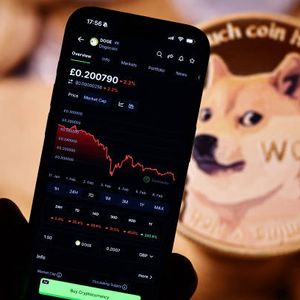
Dogecoin (DOGE), the popular meme coin, has recently re-entered 'oversold' territory on its weekly Relative Strength Index (RSI). This technical indicator suggests that selling pressure has been unusually high, driving the asset's price down to levels that some analysts consider potentially undervalued.
Market expert Cryptollica highlighted this development, noting in an X post on May 12 that Dogecoin's weekly RSI has dipped into these extreme oversold regions. This event is remarkably rare, having only occurred a few times in Dogecoin's 12-year history, making it a significant point of discussion among crypto enthusiasts and investors alike.
Historically, each instance of Dogecoin entering this oversold zone has coincided with the formation of a cycle bottom. For example, similar patterns were observed in 2015, 2020 during the COVID-19 related market downturn, and again in 2022 following the broader crypto market correction. These periods were characterised by widespread negative sentiment, fear, and disbelief among investors.
Cryptollica's analysis suggests that an oversold RSI has consistently marked a 'reset' point for Dogecoin, preceding a subsequent recovery. The current situation in 2026, according to the analyst, mirrors these past cycles, hinting that a market bottom may be forming around the $0.10 AUD equivalent range before a potential rebound.
Why it matters for Australian investors
For Australian investors, understanding these technical signals can be crucial during periods of market uncertainty. While Dogecoin is a highly volatile asset, its historical movements, particularly concerning oversold RSI levels, offer a lens through which to consider potential future trajectories. It's not a guarantee, but a pattern observed in the past.
Australian crypto platforms such as CoinSpot, Independent Reserve, Swyftx, and BTC Markets all list Dogecoin, making it readily accessible for local investors. Keeping an eye on technical indicators like the RSI can inform decisions, though it's vital to pair this with thorough research into the project's fundamentals and broader market conditions.
The Australian Taxation Office (ATO) classifies cryptocurrency as an asset for capital gains tax (CGT) purposes. This means any profits from buying and selling Dogecoin, regardless of whether it was purchased in an oversold state, are subject to CGT. Investors must maintain accurate records of their transactions on these platforms.
Furthermore, the Australian regulatory landscape, particularly with AUSTRAC overseeing anti-money laundering and counter-terrorism financing, ensures a degree of oversight on these exchanges. While ASIC continually monitors the evolving crypto space, investors should always perform their own due diligence in highly speculative assets like meme coins.
Impact on the AUD market
When a globally recognised cryptocurrency like Dogecoin enters a significant technical phase, it often generates discussion and can influence investor sentiment across various markets, including Australia. While Dogecoin's direct impact on the broader Australian dollar (AUD) market is typically limited, significant price movements or shifts in investor perception surrounding large-cap cryptocurrencies can indirectly affect local investor behaviour.
Australian crypto exchanges may see altered trading volumes or new account sign-ups if a narrative of a 'bottom' or 'buying opportunity' for Dogecoin gains traction. Increased interest could translate into more AUD being converted into cryptocurrencies on platforms like Swyftx or CoinSpot.
However, it's crucial to remember that the AUD market itself is primarily driven by macroeconomic factors, commodity prices, interest rates set by the Reserve Bank of Australia, and global economic sentiment. Dogecoin's volatility, while significant for crypto traders, is unlikely to be a primary driver of the Australian dollar's strength or weakness.
Instead, movements in Dogecoin often reflect broader crypto market sentiment, which in turn can be influenced by global financial markets. Australian investors holding Dogecoin should always consider their portfolio's overall exposure and diversification, especially given the speculative nature of such assets.
What to watch next
Following Dogecoin's entry into oversold territory, the key question for many Australian investors is whether history will repeat itself. Cryptollica's analysis points to the potential for a fresh bullish trend once a definitive price floor is established. The analyst has even projected a long-term target of $5, representing a substantial gain from current levels, though this remains a highly speculative forecast.
Investors should closely monitor Dogecoin's price action for signs of stabilisation or a reversal. While the RSI indicates strong selling pressure, a turnaround would typically involve increased buying volume and a sustained move above key resistance levels. Changes in market sentiment, often driven by broader economic or crypto-specific news, will also play a role.
It's important for Australian investors to approach such predictions with caution and scepticism. While historical patterns can provide context, they are not indicators of future performance. Market conditions, regulatory changes (both domestic from ASIC and AUSTRAC, and international), and broader economic trends can all influence the crypto market in unpredictable ways.
Consider diversifying any crypto holdings and only investing what you can afford to lose. Keep an eye on global crypto news and how it might impact Dogecoin, rather than relying solely on single technical indicators, especially for highly speculative assets like meme coins. This balanced approach is crucial for navigating the often-volatile world of cryptocurrency investment in Australia.
Coins covered



Common questions
What does 'oversold' mean for Dogecoin on Australian crypto exchanges?
When Dogecoin is described as 'oversold' on Australian crypto exchanges, it refers to a technical analysis indicator, typically the Relative Strength Index (RSI), suggesting that heavy selling pressure has driven its price down significantly. It implies that the asset might be temporarily undervalued and could experience a price rebound, though this is not a guarantee and depends on various market factors.
How does the ATO tax Dogecoin if I buy it during an 'oversold' period?
The Australian Taxation Office (ATO) treats Dogecoin (and other cryptocurrencies) as an asset for Capital Gains Tax (CGT) purposes. This means when you sell, swap, or otherwise dispose of Dogecoin that you purchased during an 'oversold' period (or any period), any profit you make is generally subject to CGT. You must keep records of your purchase price (cost base) in AUD, and if you hold it for over 12 months, you might be eligible for a 50% CGT discount.
Can Australian investors really expect Dogecoin to rebound significantly after being oversold?
While historical data suggests that previous 'oversold' periods for Dogecoin have often preceded cycle bottoms and subsequent rallies, this past performance is not indicative of future results. Cryptocurrency markets, especially for meme coins like Dogecoin, are highly volatile and speculative. Australian investors should conduct their own research, consider their risk tolerance, and understand that price prediction models are inherently uncertain. It's crucial not to interpret historical patterns as guaranteed future outcomes.
Dogecoin hits historic oversold levels, sparking analysis for Australian investors. Explore why this rare event matters for AUD markets and what's next.