
Crypto Payments at Checkout: How to Use IronWallet to Pay for Your Latte with USDT
AI-summarised from reporting by Bitzo. How we use AI.
What happened
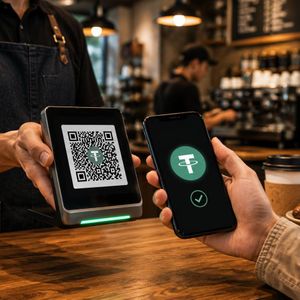
Australians are increasingly encountering digital payment options, and the global payments landscape took another leap forward in 2026 with the live deployment of stablecoin payments at physical retail checkouts. This evolution saw payment terminals from major providers like Ingenico, alongside smart point-of-sale (POS) devices from iMin, integrate direct crypto payment capabilities. This means that alongside traditional card payments, consumers can now use digital assets to pay for everyday items.
The technological backbone for this shift is WalletConnect Pay, a protocol layer that bridges the gap between merchant systems and consumer crypto wallets. One such wallet, IronWallet, has emerged as a key player in this new ecosystem. Designed for modern retail transactions, IronWallet offers features like no-KYC signup, gasless USDT transfers on the Tron network, and seamless WalletConnect Pay integration.
This setup allows a user with IronWallet on their smartphone and USDT in their balance to conduct a transaction at compatible merchants in mere seconds. The entire process resembles a familiar mobile contactless payment – the user scans a QR code displayed at the checkout, reviews the payment details, selects their preferred token and network (e.g., USDT on Tron), and approves the payment within their wallet. The underlying blockchain transaction settles rapidly, and the merchant's terminal confirms the payment.
The real innovation lies beneath the surface. WalletConnect Pay facilitates communication between diverse merchant terminals and any compatible user wallet, ensuring flexibility. Crucially, users retain custody of their assets throughout the transaction. Merchants, meanwhile, can opt to receive payment in their preferred form; WalletConnect Pay handles the crypto-to-fiat conversion if the merchant doesn't wish to hold stablecoins. This complex infrastructure simplifies the checkout experience for consumers.
Why it matters for Australian investors
The advent of stablecoin payments at the physical checkout has significant implications for Australian investors, particularly those engaged with the crypto market. While traditional financial institutions and payment rails still dominate, the increasing utility of stablecoins like USDT in day-to-day transactions could bolster their adoption and perceived stability. For Australian investors holding USDT, this creates a new avenue for utilising their digital assets beyond trading or staking.
This development might also influence the broader crypto ecosystem within Australia. As more merchants potentially adopt such payment solutions, it could drive increased demand for stablecoins and the cryptocurrencies used for network fees, such as TRX for Tron. Australian crypto exchanges like CoinSpot, Independent Reserve, Swyftx, and BTC Markets, where many Australians acquire their stablecoins, could see increased transaction volumes as users move funds to and from wallets like IronWallet.
Furthermore, the “no-KYC” aspect of some wallets, while offering user privacy and speed, brings important considerations for Australian investors. AUSTRAC, Australia's financial intelligence agency, has strict anti-money laundering (AML) and counter-terrorism financing (CTF) regulations. While such wallets might facilitate small, everyday payments, larger transactions or movements of funds between these wallets and regulated Australian exchanges would still fall under AUSTRAC's purview, requiring identity verification.
The ATO's stance on cryptocurrency taxation is also relevant. Any gain or loss from converting crypto to fiat (or using crypto to purchase goods and services) is generally considered a capital gains tax (CGT) event for Australian taxpayers. While paying for a latte with USDT might seem minor, investors need to be mindful of recording these transactions for tax purposes, as even small everyday purchases could theoretically trigger a CGT event, depending on their cost base for the stablecoins.
Impact on the AUD market
While still nascent, the growth of crypto payments at checkout could have a subtle, long-term impact on the Australian dollar (AUD) market. As more Australians potentially use stablecoins for purchases, there could be a marginal shift in transaction volume away from traditional AUD-denominated debit/credit card payments. However, for merchants who opt for instant crypto-to-fiat conversion, the ultimate settlement would still occur in AUD, limiting direct impacts on AUD liquidity.
The efficiency and low fees associated with networks like Tron for stablecoin transactions, particularly when compared to traditional card interchange fees, could be attractive to Australian businesses. For small-ticket items, where card fees can erode margins, crypto payments might offer a cost-effective alternative. This could, over time, lead to a competitive pressure on traditional payment providers to reduce their own fees in the Australian market.
However, it's essential to note that the immediate impact on the AUD market is likely to be minimal. The sheer volume of traditional AUD transactions far outweighs current crypto payment adoption. The Australian regulatory environment, with bodies like ASIC overseeing financial products and services, means that any widespread adoption would necessitate robust consumer protection and regulatory clarity around stablecoin usage and merchant settlement processes.
Should stablecoin payments gain substantial traction, the mechanism for crypto-to-fiat conversion would become crucial. If WalletConnect Pay or similar services facilitate direct AUD settlement for Australian merchants, it would integrate smoothly into the existing financial system. Conversely, if merchants increasingly opt to hold stablecoins, it could introduce new dynamics but also new risks, which Australian businesses would need to carefully consider within the context of their operational and financial strategies.
What to watch next
For Australian investors and consumers, the evolution of stablecoin payments at checkout presents several key areas to monitor. Firstly, keep an eye on broader merchant adoption. While the technology is proving viable globally, its uptake by Australian retailers, especially major chains, will be a critical indicator. Any announcements from prominent Australian businesses or payment processors regarding WalletConnect Pay integration would signal an important shift.
Secondly, regulatory developments in Australia are paramount. AUSTRAC and ASIC continue to monitor the digital asset space closely. Clearer guidance or new regulations specific to stablecoin payments, consumer protection, and merchant obligations could either accelerate or slow down adoption. Understanding how the ATO will handle the tax implications of frequent, small crypto purchases will also be crucial for users.
Thirdly, observe the performance and security of wallets like IronWallet within the Australian context. User experience, transaction speed, network reliability, and security features will dictate consumer confidence. Any security breaches or major disruptions could significantly impact public perception and adoption rates, particularly given Australia's cautious approach to new financial technologies.
Finally, the competition within the payment processing landscape will be interesting to watch. If stablecoin payments prove genuinely cost-effective for Australian merchants, traditional payment providers may innovate their offerings or adjust their fee structures. This could lead to a more competitive and efficient payment ecosystem overall, benefiting both businesses and consumers across Australia. The journey of crypto payments from novelty to mainstream utility in Australia is just beginning.
Coins covered
 View usdcUSDCusdcLive price, charts & AUD analysis
 View ethEthereumethLive price, charts & AUD analysis
 View usdtTetherusdtLive price, charts & AUD analysis
 View trxTRONtrxLive price, charts & AUD analysis
 View jstJUSTjstLive price, charts & AUD analysis
 View arbArbitrumarbLive price, charts & AUD analysis
 View btcBitcoinbtcLive price, charts & AUD analysis
Common questions
Are crypto payments at checkout legal in Australia?
Yes, using cryptocurrency to pay for goods and services is generally legal in Australia, though it is subject to the Australian Taxation Office's (ATO) income tax and capital gains tax (CGT) rules. Australian businesses accepting crypto payments must also comply with AUSTRAC's anti-money laundering (AML) and counter-terrorism financing (CTF) regulations. The mechanism by which the crypto is accepted and converted might trigger different regulatory considerations.
How does buying groceries with crypto affect my Australian taxes?
In Australia, when you use cryptocurrency to pay for goods or services, the ATO generally treats this as a disposal of a capital asset. This means you might incur a capital gain or loss depending on the difference between the value of the cryptocurrency when you acquired it and its market value at the time you used it for payment. Keeping meticulous records of all crypto transactions, including for small purchases, is crucial for accurate tax reporting.
Which Australian crypto exchanges support stablecoins like USDT for everyday payments?
Major Australian crypto exchanges like CoinSpot, Independent Reserve, Swyftx, and BTC Markets all list and allow users to buy and sell stablecoins such as USDT. While these exchanges are platforms for acquisition and trading, a wallet like IronWallet, with WalletConnect Pay integration, is what enables direct use of these stablecoins at physical retail checkouts. You would typically transfer your stablecoins from an exchange to such a personal wallet for payment purposes.
Discover how stablecoin payments at checkout, enabled by WalletConnect Pay and IronWallet, impact Australian investors and the AUD market.
About this article: this is an AI-generated summary of reporting by Bitzo. It has not been reviewed by a human editor. We use AI to localise crypto news for Australian readers, and we link back to the original source so you can verify the facts.
Informational only — not financial advice. Always do your own research. Read our AI & editorial policy →