
Bitcoin treads water near pivotal monthly close while speculative tokens retreat
What happened
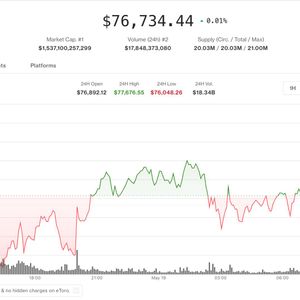
Bitcoin, the world's leading cryptocurrency, has recently exhibited a period of consolidation, largely treading water near a crucial price point as the monthly close approached. This relative stability in Bitcoin's value occurred even as several altcoins, particularly more speculative tokens, experienced a notable retreat. The market observed a decline in some of these smaller-cap digital assets, indicating a potential shift in investor sentiment away from higher-risk cryptocurrencies.
The broader crypto market often looks to Bitcoin for direction. Its ability to maintain a key support level around this time was a significant point of interest for analysts and traders globally. While some highly speculative tokens, exemplified by WLFI in this instance, saw significant downward pressure, Bitcoin's steadfastness suggested underlying strength or at least a temporary pause in downward momentum for the foundational digital asset. This divergence between Bitcoin's stability and altcoin weakness often signals a 'flight to quality' within the cryptocurrency sector.
Why it matters for Australian investors
For Australian investors, Bitcoin's performance is a critical barometer for the health of their crypto portfolios. While Bitcoin's price might be quoted in US dollars on international exchanges, its value translates directly into AUD on local platforms like CoinSpot, Independent Reserve, Swyftx, and BTC Markets. Any significant movement, or lack thereof, impacts the AUD value of their digital holdings. A stable Bitcoin price amidst retreating altcoins could be seen as a de-risking event, potentially prompting a reallocation of capital towards more established assets.
Australian investors are also mindful of the regulatory landscape. The Australian Taxation Office (ATO) treats cryptocurrency as property for tax purposes, meaning capital gains tax applies to profits. Bitcoin's stability can reduce volatility-induced tax events compared to rapidly fluctuating altcoins. Furthermore, the regulatory oversight by AUSTRAC (Australian Transaction Reports and Analysis Centre) ensures that Australian exchanges operate with robust anti-money laundering and counter-terrorism financing measures, providing a degree of security for local participants accessing these markets.
Impact on the AUD market
The Australian dollar (AUD) cryptocurrency market, although smaller than its US counterpart, is highly sensitive to global Bitcoin movements. When Bitcoin holds a critical price level, it instils confidence among Australian investors and could temper a sell-off in locally traded assets. Conversely, a sharp decline in Bitcoin would likely trigger similar, if not amplified, downward pressure across AUD-denominated crypto pairs.
Local exchanges actively facilitate the buying and selling of Bitcoin and other cryptocurrencies using AUD. A period of Bitcoin consolidation allows Australian investors to re-evaluate their positions without the immediate pressure of extreme price swings. This provides an opportunity for strategic planning, considering both market fundamentals and their personal financial objectives. The overall sentiment in the global Bitcoin market directly influences liquidity and trading volumes on Australian platforms, impacting the ease with which investors can enter or exit positions.
What to watch next
Investors, both in Australia and globally, will be closely monitoring Bitcoin's ability to sustain its current levels following the monthly close. The performance of speculative altcoins against Bitcoin's stability will be a key indicator. A continued retreat in altcoins while Bitcoin holds strong might suggest a rotation of capital into Bitcoin, reinforcing its position as a safe haven within the crypto ecosystem.
Furthermore, broader macroeconomic factors, including global inflation data, interest rate decisions by central banks, and geopolitical developments, will inevitably influence Bitcoin's trajectory. Australian investors should also keep an eye on any new announcements from local regulators like ASIC regarding cryptocurrency product offerings or consumer protection. The interplay between global market sentiment and local regulatory clarity will shape the Australian crypto market in the coming weeks and months, making careful observation paramount for informed decision-making.
Coins covered


Common questions
How does Bitcoin's stability affect my AUD crypto portfolio?
Bitcoin's stability typically provides a foundational level of confidence for the broader crypto market. If Bitcoin holds steady while altcoins retract, it can signify a de-risking trend where investors move towards more established assets. For your AUD portfolio, this means the value of your Bitcoin holdings expressed in Australian dollars remains relatively stable, potentially cushioning volatility from other digital assets you may own.
What Australian crypto exchanges offer Bitcoin trading in AUD?
Several reputable Australian exchanges facilitate Bitcoin trading directly with Australian Dollars (AUD). Prominent platforms include CoinSpot, Independent Reserve, Swyftx, and BTC Markets. These exchanges are regulated by AUSTRAC and provide secure environments for purchasing, selling, and holding your Bitcoin and other cryptocurrencies.
Does the ATO tax Bitcoin differently than other cryptocurrencies in Australia?
No, the Australian Taxation Office (ATO) generally treats Bitcoin and other cryptocurrencies similarly for tax purposes. They are considered property/assets rather than currency. This means that any profits you make from selling, swapping, or using Bitcoin for goods and services are usually subject to Capital Gains Tax (CGT). It's always advisable to keep thorough records of your crypto transactions to ensure compliance.
Bitcoin's recent stability could impact Australian investors amid altcoin retreats. CoinPulse AU analyses why this matters for AUD portfolios and what to watc