
Bitcoin Price Analysis: What Does the Rejection at $80K Mean for BTC’s Future?
What happened
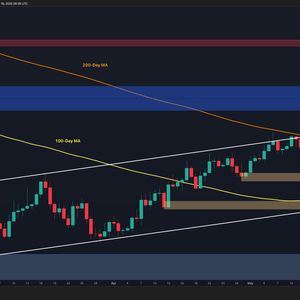
Bitcoin recently struggled to maintain its upward trajectory, encountering significant resistance around the $80,000 (USD) mark. This rejection followed a brief recovery from the $78,000 support level, but ultimately, buyers were unable to push prices higher.
The critical resistance zone, spanning from $80,000 to $82,000, proved formidable. This area not only represents a key psychological barrier but also aligns with the descending 200-day moving average, a strong technical indicator of potential overhead supply. The confluence of these factors highlights the persistent bearish sentiment currently dominating the market.
From a technical perspective, Bitcoin also experienced a significant breakdown from an ascending trendline that had previously underpinned its recovery. A subsequent attempt to retest this broken trendline met with another rejection, validating the prior bearish breakout. This classic breakdown-and-retest pattern often signals a continuation of the initial bearish move, suggesting that sellers remain firmly in control.
This inability to sustained gains above key thresholds indicates that sellers are still dominant. Consequently, the likelihood of a further corrective phase in the short term has increased. Market participants are now closely watching the $75,000-$76,000 range as the immediate downside target, with the potential for a deeper correction towards $70,000-$71,000 if this support fails to hold.
Why it matters for Australian investors
Australian investors holding Bitcoin on platforms like CoinSpot, Independent Reserve, Swyftx, or BTC Markets will be keenly observing these price movements. While these price points are quoted in USD, the AUD-denominated value of their holdings will directly reflect these shifts, adjusted for the prevailing AUD/USD exchange rate. A decline in Bitcoin's USD price will naturally lead to a decrease in its Australian dollar equivalent.
Moreover, the sentiment analysis, particularly the Coinbase Premium Gap, offers a valuable insight often overlooked by retail investors. A negative premium, indicating weaker demand from US institutional and spot investors, can signal broader market caution. Given the significant influence of the US market on global crypto prices, such a trend can pre-empt wider selling pressure that eventually impacts all markets, including Australia.
Understanding these technical rejections and sentiment indicators allows Australian investors to assess risk more effectively. It can inform decisions regarding portfolio rebalancing, profit-taking strategies, or identifying potential entry points, always in conjunction with their personal financial goals and risk tolerance. The ASIC has consistently warned about the volatility inherent in crypto assets, making informed decision-making crucial.
Furthermore, for Australian investors, tax implications are always a consideration. The ATO treats cryptocurrencies as assets. Any gains or losses from selling or trading Bitcoin, regardless of whether it's on an Australian or international exchange, must be reported. A significant correction could trigger capital gains or losses depending on an investor's acquisition price, underscoring the need for meticulous record-keeping.
Impact on the AUD market
The Australian dollar (AUD) cryptocurrency market, though smaller, is largely correlated with global Bitcoin trends. A sustained downtrend in Bitcoin's USD price typically translates to lower AUD prices for the digital asset on local exchanges. This correlation is due to the deep integration of global liquidity and the arbitrage opportunities that arise when price discrepancies occur.
Australian exchanges primarily facilitate AUD conversions, but their underlying Bitcoin reserves are priced against the global USD market. Therefore, the rejection at $80,000 USD means that Australian holders are likely to see their AUD-denominated portfolios reflect this downward pressure.
While AUSTRAC regulates Australian digital currency exchanges to combat money laundering and terrorism financing, these regulations do not insulate the market from global price swings. The regulatory environment aims for market integrity, but not price stability. Thus, Australian investors must remain aware that local market conditions are heavily influenced by international trends.
Lower Bitcoin prices also have a ripple effect on the broader Australian crypto landscape. Reduced investor confidence resulting from a significant correction might lead to decreased trading volumes on Australian platforms and potentially temper interest in other altcoins, many of which are highly correlated with Bitcoin's performance.
What to watch next
All eyes will be on Bitcoin's ability to defend the immediate support levels. The region between $75,000 and $76,000 (USD) is now a crucial battleground. A strong bounce off this area could signal renewed buying interest, potentially setting the stage for another attempt at higher resistance levels.
Conversely, a clear break below $75,000-$76,000 would significantly strengthen the bearish case. This could accelerate selling pressure, with the next major demand zone identified around $70,000-$71,000. Failure to hold this broader range could expose lower support tiers, initiating a more pronounced corrective phase.
Beyond technical charts, the Coinbase Premium Gap will serve as a key sentiment indicator. If this metric remains in negative territory, it suggests continued weakness in spot demand from major US investors, which historically aligns with periods of market correction. A return to positive values would signal a shift in institutional sentiment, potentially supporting a recovery.
Australian investors should also monitor global macroeconomic factors, such as interest rate decisions from central banks and inflation data, as these often influence broader market liquidity and investor sentiment towards riskier assets like cryptocurrencies. Staying informed about these developments will be crucial for navigating the market in the coming weeks.
Coins covered


Common questions
How does Bitcoin's USD price affect my crypto holdings on Australian exchanges?
Australian exchanges like CoinSpot or Swyftx quote Bitcoin prices in AUD. This AUD price is derived from its global USD price, adjusted by the current AUD/USD exchange rate. Therefore, a dip in Bitcoin's USD value directly translates to a lower AUD value for your holdings, even if you don't trade in USD.
What are the tax implications in Australia if Bitcoin falls significantly?
Under ATO rules, any sale or disposal of Bitcoin (even if to another crypto or fiat) can trigger a capital gains or losses event. If the price falls and you sell at a loss, you might incur a capital loss that can be used to offset capital gains in the same or future financial years. It's crucial to maintain accurate records of your purchase and sale prices in AUD.
Are Australian crypto exchanges regulated, and does this protect me from price drops?
Australian digital currency exchanges are regulated by AUSTRAC to prevent financial crime like money laundering and terrorism financing. However, this regulation does not protect investors from price volatility or market downturns. Crypto assets remain susceptible to global market forces and inherent price swings, as warned by ASIC.
Bitcoin's rejection at $80K USD signals potential correction. CoinPulse AU analyses key resistance, market sentiment & impact for Australian investors.