
Bitcoin ETFs Lose $1B Weekly, CLARITY Act Advances, Bitcoin Depot Flags Going Concern
What happened
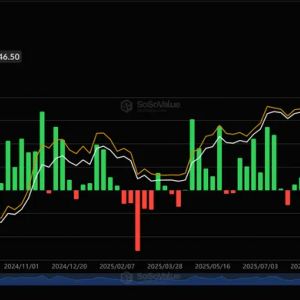
The cryptocurrency market has witnessed a significant shift, with Bitcoin exchange-traded funds (ETFs) experiencing substantial outflows. After a six-week period that saw approximately $3.4 billion in fresh capital flow into these investment vehicles, the trend has reversed. The week concluded with a net outflow of $1 billion from spot Bitcoin ETFs, marking a notable downturn in investor sentiment.
This marks a critical moment for the burgeoning Bitcoin ETF market. Such a significant outflow not only contrasts sharply with the preceding growth but also raises questions about investor confidence and market dynamics. The reversal began earlier in the week, indicating a broad-based move by institutional and retail investors to withdraw funds from these instruments.
Several factors could be contributing to this shift. Broader macroeconomic conditions, including inflation concerns and central bank policies, often influence investor appetite for risk assets like Bitcoin. Additionally, profit-taking after a period of sustained gains may be playing a role, with some investors choosing to lock in returns.
The large-scale outflow from US-listed spot Bitcoin ETFs, which were only approved earlier this year, highlights the volatile nature of cryptocurrency investments. While the initial launch spurred considerable enthusiasm and capital inflow, the recent reversal underscores the sensitivity of these products to market sentiment and external economic pressures.
Why it matters for Australian investors
For Australian investors, the performance of global Bitcoin ETFs, particularly those in the US, provides a bellwether for wider market trends. While Australia has its own unique regulatory landscape and market characteristics, the interconnectedness of global financial markets means that significant movements overseas often ripple Down Under. Local exchanges like CoinSpot, Independent Reserve, Swyftx, and BTC Markets could observe changes in trading volumes or investor behaviour in response to these international dynamics.
This shift in ETF sentiment could influence Australian investors' decisions regarding their cryptocurrency portfolios. A period of global outflows might lead some to re-evaluate their exposure to Bitcoin, considering its classification by the ATO as property for tax purposes. Understanding the implications of such movements for capital gains and losses becomes paramount for complying with Australian tax obligations.
The Australian market, while smaller, is not immune to global pressures. Regulatory bodies like AUSTRAC, which oversees anti-money laundering and counter-terrorism financing, and ASIC, which focuses on consumer protection and market integrity, will continue to monitor the landscape. The stability and integrity of local crypto platforms are particularly important during periods of market uncertainty.
Furthermore, the long-term outlook for Bitcoin and other digital assets remains a topic of considerable debate among Australian financial analysts. While short-term fluctuations are part and parcel of the crypto market, understanding these broader trends from international markets helps Australian investors make more informed decisions rather than reacting impulsively to daily price movements.
Impact on the AUD market
The net $1 billion outflow from Bitcoin ETFs overseas does not directly translate into an equivalent outflow from the Australian Dollar (AUD) market. However, it can have an indirect influence on AUD-denominated crypto assets and investor behaviour. When global sentiment towards Bitcoin sours, it can lead to a general decline in demand for cryptocurrencies worldwide, which may be reflected in AUD-pegged trading pairs on Australian exchanges.
Australian investors holding Bitcoin priced in AUD might see their portfolio values decrease if global prices fall. This phenomenon is common in highly correlated global markets. While direct exchange rate fluctuations between AUD and USD also play a role, the dominant factor here would be the underlying asset's price movement in major markets.
Local crypto platforms could observe increased sell-side pressure or a reduction in new investment if Australian investors mirror international sentiment. This could impact liquidity on these platforms, although the deep liquidity of global markets generally helps absorb significant movements. The overall impact on the AUD market will largely depend on the duration and scale of these global outflows, and whether they evolve into a sustained trend or remain a temporary correction.
Regulatory scrutiny from organisations like ASIC and AUSTRAC might also intensify during periods of market volatility. Their ongoing efforts to ensure consumer protection and market integrity become even more crucial as investors navigate potentially unpredictable market conditions. Healthy, well-regulated Australian exchanges are vital for maintaining investor confidence during such times.
What to watch next
Moving forward, Australian investors should closely monitor several key indicators. The rate of inflows and outflows from global spot Bitcoin ETFs will be a primary metric. A reversal of the current trend, where sustained inflows return, could signal renewed investor confidence and potentially a rebound in Bitcoin's price. Conversely, continued large-scale outflows might indicate a deepening correction.
Macroeconomic data, especially inflation reports from major economies and statements from central banks like the US Federal Reserve, will also be critical. High inflation or hawkish monetary policies can reduce investor appetite for risk assets, including Bitcoin. Conversely, signs of easing inflation or a dovish stance could provide a tailwind for cryptocurrencies.
Domestically, Australian investors should keep an eye on any developments in local cryptocurrency regulation. While specific Australian Bitcoin ETFs are still nascent compared to the US market, the regulatory environment is constantly evolving. Clarifications from the ATO regarding tax treatment or new guidelines from ASIC could significantly impact the investment landscape for digital assets.
Finally, observing the behaviour of major institutional players in the US and European markets can offer insights. Their strategic moves often prefigure broader market shifts. For Australian investors, remaining informed about these global developments, in conjunction with local market conditions, will be essential for navigating the dynamic cryptocurrency landscape effectively. Staying abreast of analysis from trusted sources and ensuring compliance with Australian tax requirements remains paramount.
Coins covered

Common questions
How do Bitcoin ETF outflows in the US affect my Bitcoin holdings on Australian exchanges like CoinSpot or Swyftx?
While US Bitcoin ETF outflows don't directly drain funds from Australian exchanges, they reflect international investor sentiment. A significant downturn in global sentiment often leads to a decrease in the US Dollar price of Bitcoin, which in turn typically affects the Australian Dollar price you see on local platforms. Your holdings might decrease in AUD value due to this global price action.
What Australian tax implications should I consider if Bitcoin's value changes due to global market movements?
In Australia, the ATO treats cryptocurrency as property for tax purposes. If the value of your Bitcoin holdings (which are priced in AUD) decreases when you sell or dispose of them, you may incur a capital loss. Conversely, if the value increases, it could result in a capital gain. It’s crucial to keep accurate records of your purchase and sale prices in AUD to calculate your tax obligations correctly, regardless of international market influences.
Are Australian regulators like ASIC or AUSTRAC concerned by global Bitcoin market volatility?
Yes, Australian regulators like ASIC (monitoring market integrity and consumer protection) and AUSTRAC (focusing on anti-money laundering and counter-terrorism financing) are continuously monitoring the global cryptocurrency market. While they don't directly control international price movements, sustained global volatility can prompt them to enhance investor warnings, review local market safeguards, and ensure Australian digital asset service providers comply with their obligations to protect consumers and maintain financial stability.
Global Bitcoin ETFs saw $1B outflows last week. CoinPulse AU analyses what this means for Australian investors, AUD market, and what to watch next.