
Bitcoin Bulls Lose Control After $78,000 Rejection Wipes out Overnight Recovery
What happened
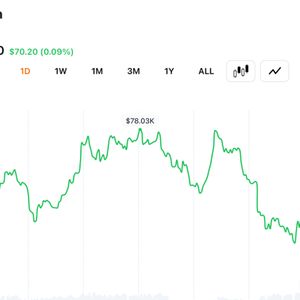
Bitcoin recently experienced a significant price correction, failing to sustain its earlier gains after being rejected from the US$78,000 level. This downturn saw the cryptocurrency's price drop to just over US$77,000, effectively reversing an overnight recovery. The inability to hold the higher price point suggests a lack of sustained buying pressure, preventing Bitcoin from establishing a firm foothold above this key resistance.
This price movement comes after a period of volatility in the broader crypto market. Investors worldwide, including those in Australia, closely monitor Bitcoin's performance as it often sets the tone for other digital assets. The recent dip highlights the market's sensitivity to various factors, including shifting investor sentiment and macro-economic indicators.
The swift reversal from US$78,000 indicates that sellers exerted considerable influence, overcoming the temporary bullish momentum. This particular price action underscores the dynamic nature of the crypto market, where gains can be quickly unwound. It's a reminder for all participants, whether seasoned traders or new entrants, of the rapid fluctuations inherent in digital asset valuations.
Multiple factors can contribute to such a price rejection, including profit-taking by short-term traders or broader market caution. While the exact trigger for this specific downturn wasn't immediately clear, the outcome was a notable loss of recent upward trajectory for Bitcoin, resetting its short-term price expectations.
Why it matters for Australian investors
For Australian investors, Bitcoin's price movements have direct implications, particularly regarding their portfolio valuations and trading strategies. A dip in Bitcoin's price, even a relatively modest one, can trigger broader market adjustments across other cryptocurrencies held on platforms like CoinSpot, Independent Reserve, Swyftx, and BTC Markets. This ripple effect is a key characteristic of the interconnected crypto ecosystem.
Furthermore, the Australian Dollar (AUD) exchange rate against the US Dollar (USD) always plays a role in how Bitcoin's price is perceived locally. While Bitcoin's value is typically quoted in USD, Australian investors buy and sell using AUD. A weaker AUD can make Bitcoin appear relatively more expensive when converted, even if its USD price remains stable or drops slightly.
Tax implications are another perennial consideration. The Australian Taxation Office (ATO) views cryptocurrency as property for capital gains tax (CGT) purposes. Any profit realised from selling Bitcoin after a price increase, or losses incurred during a downturn, must be reported. Understanding these tax obligations is crucial for Australian investors, regardless of market direction.
Regulatory developments, though not directly linked to this price movement, remain an overarching concern for Australian crypto participants. Organisations like AUSTRAC and ASIC continually monitor the digital asset space to ensure compliance and consumer protection. While this specific event is a market fluctuation, the broader regulatory environment shapes how Australian investors engage with crypto assets.
Impact on the AUD market
The immediate impact on the Australian crypto market, particularly in AUD terms, would have been a corresponding decrease in the AUD value of Bitcoin holdings. Australian exchanges like Independent Reserve and Swyftx would have reflected this price adjustment instantly, often showing Bitcoin's price quoted directly in AUD for user convenience. This direct correlation means a USD price drop translates directly to a lower AUD price.
This scenario might prompt some Australian investors to re-evaluate their positions. Those who entered the market during the recent recovery might find their unrealised gains diminished or even turn into minor losses. Conversely, some long-term holders might view the dip as a potential 'buy the dip' opportunity, averaging down their purchase price in AUD.
The volume of trading on Australian platforms could also have been affected. Significant price movements, both up and down, often correlate with increased trading activity. Investors might have been consolidating positions, taking profits, or initiating new trades in response to the volatility. This heightened activity can sometimes lead to greater liquidity, although it also signals increased market uncertainty.
The broader sentiment among Australian investors for Bitcoin, and cryptocurrencies generally, tends to mirror global trends. A price rejection at a key resistance level can temper bullish expectations and encourage a more cautious approach. This does not necessarily signal a sustained downturn, but rather a moment of reflection and potential re-strategising for many Australian crypto enthusiasts.
What to watch next
Moving forward, Australian investors should closely monitor several key indicators. Bitcoin's ability to reclaim the US$78,000 level will be a significant test of its short-term strength. A sustained move above this point could indicate renewed bullish momentum, while a continued struggle might suggest further consolidation or downward pressure. Watching these resistance levels is crucial for understanding market sentiment.
Furthermore, global macroeconomic data, such as inflation reports and interest rate decisions from major central banks, will continue to influence risk asset markets, including Bitcoin. While not a direct driver of this specific price rejection, the broader economic climate often dictates investor appetite for more volatile assets. Australian investors should keep an eye on these global movements as they impact local market conditions.
Analysing order books and trading volumes on major international and Australian exchanges can provide insights into buying and selling pressure. A significant increase in sell orders around specific price points could indicate strong overhead resistance. Conversely, robust buying volume on dips could signal market support. Platforms like BTC Markets and CoinSpot offer access to this data, albeit with varying levels of detail.
Finally, staying informed about any new regulatory developments, both domestically from bodies like ASIC and AUSTRAC, and internationally, is always prudent. While the current price action is market-driven, changes in regulation can significantly alter the investment landscape for digital assets. For Australian investors, a holistic view of technical, fundamental, and regulatory factors will be essential for navigating the evolving crypto market in the weeks and months to come.
Coins covered


Common questions
How does Bitcoin's price rejection impact my AUD crypto holdings?
A Bitcoin price rejection, particularly when its USD value drops, directly reduces the Australian Dollar (AUD) equivalent of your crypto holdings. This is because Australian exchanges convert the USD price to AUD, meaning a lower USD price translates proportionally to a lower AUD value for your investment.
What are the tax implications in Australia if Bitcoin's price drops significantly?
In Australia, if you sell Bitcoin for less than its purchase price, you may incur a capital loss as per ATO guidelines. This capital loss can generally be used to offset other capital gains, reducing your overall tax liability. It's crucial to keep accurate records of all your crypto transactions for tax reporting.
Which Australian exchanges track Bitcoin's AUD price movements accurately?
Reputable Australian exchanges such as CoinSpot, Independent Reserve, Swyftx, and BTC Markets all provide real-time tracking of Bitcoin's price, typically quoted directly in Australian Dollars (AUD). They reflect global price movements, adjusted for the current AUD/USD exchange rate, allowing Australian investors to monitor their portfolios accurately.
Bitcoin's rejection at $78,000 impacts Australian investors. Discover why this matters for your portfolio, the AUD market, and what to watch next.